Klintebakken
Klintebakken
– more than a billion years of geology in just a few steps
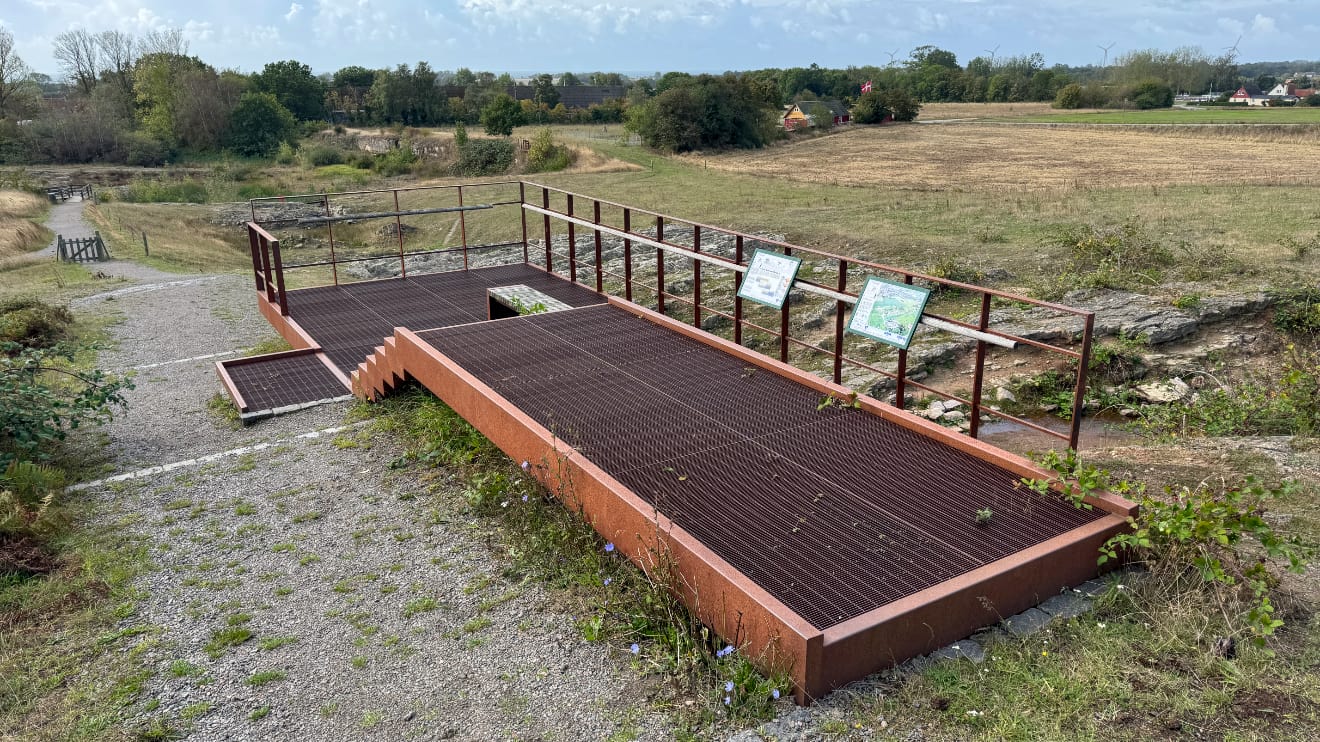
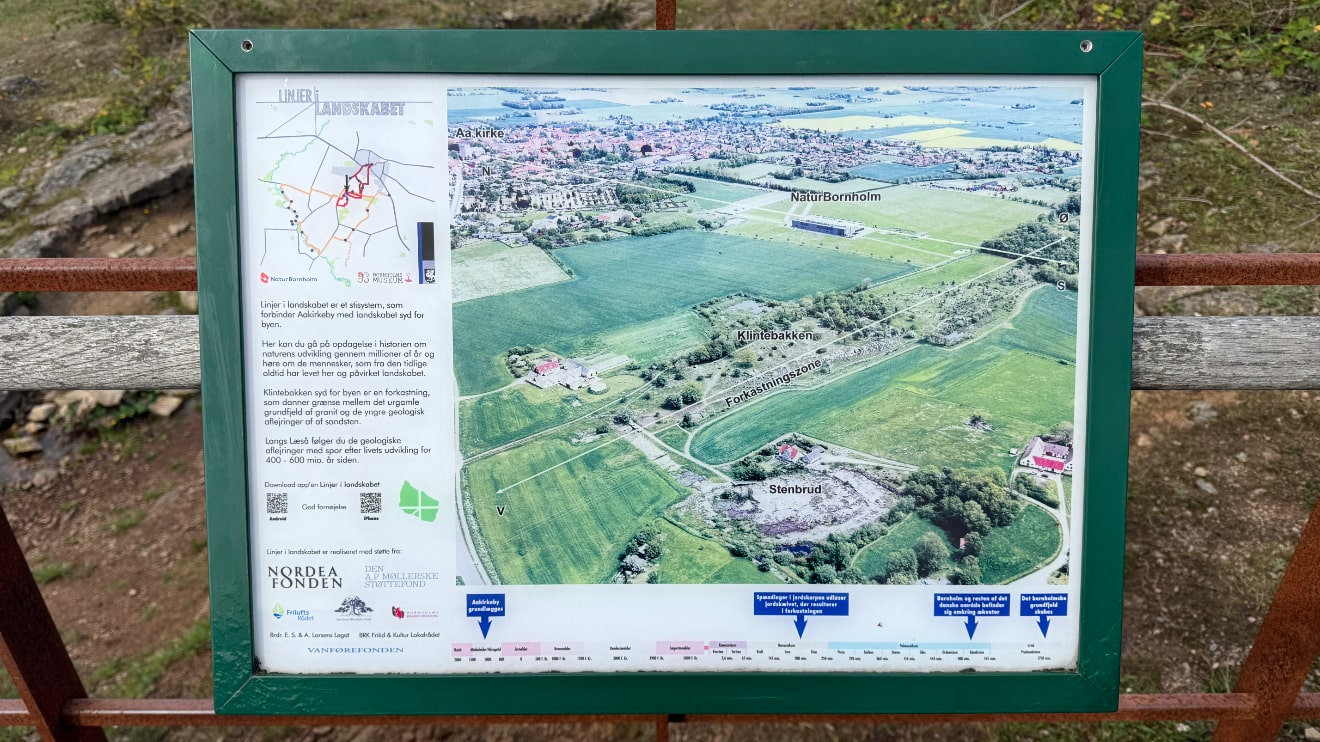
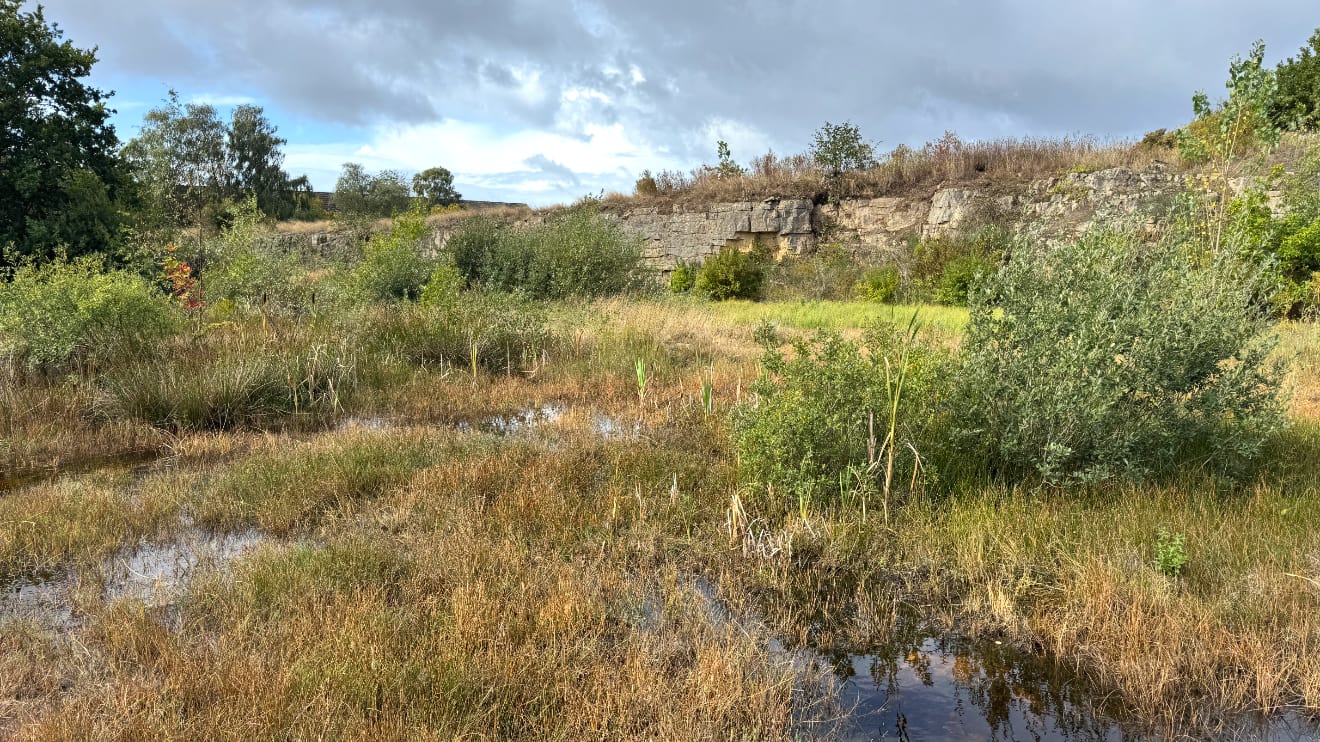
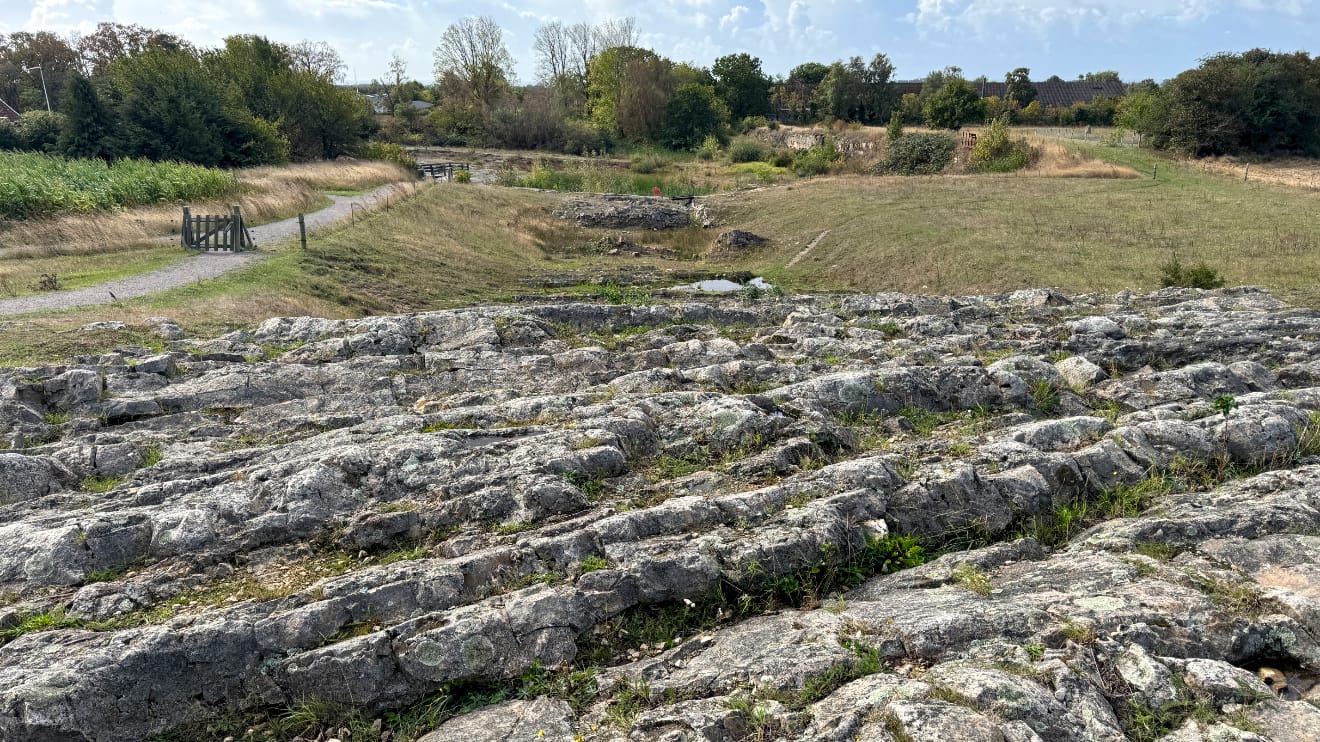
Just south of NaturBornholm lies one of Bornholm’s most fascinating geological sites. At Klintebakken, you can move between rocks with an age difference of more than a billion years in just a few steps, stand in the middle of an ancient fault zone and continue down to a fossilised seabed around 530 million years old.
It is a place that does not necessarily reveal its story at first glance. But once you know what to look for, the landscape around Klintebakken becomes an unusually tangible journey through Bornholm’s geological past.
Where old and young Bornholm meet
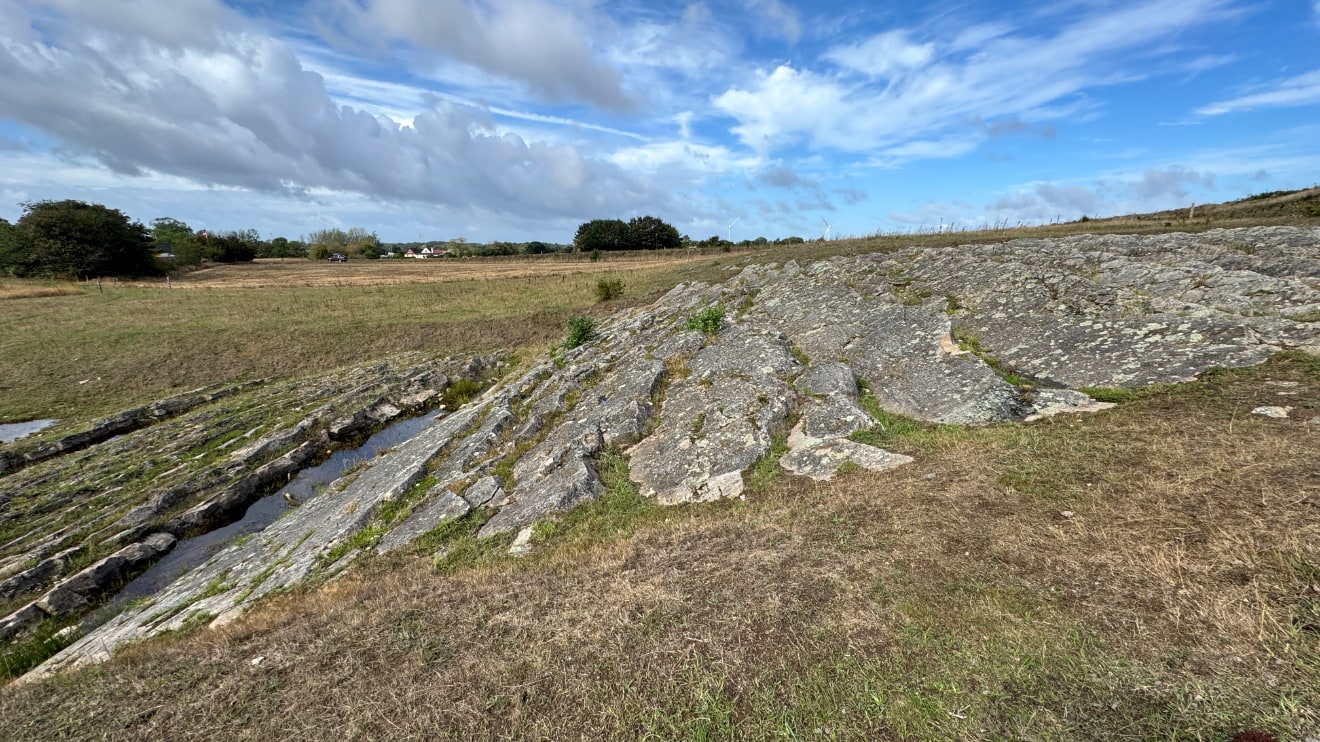
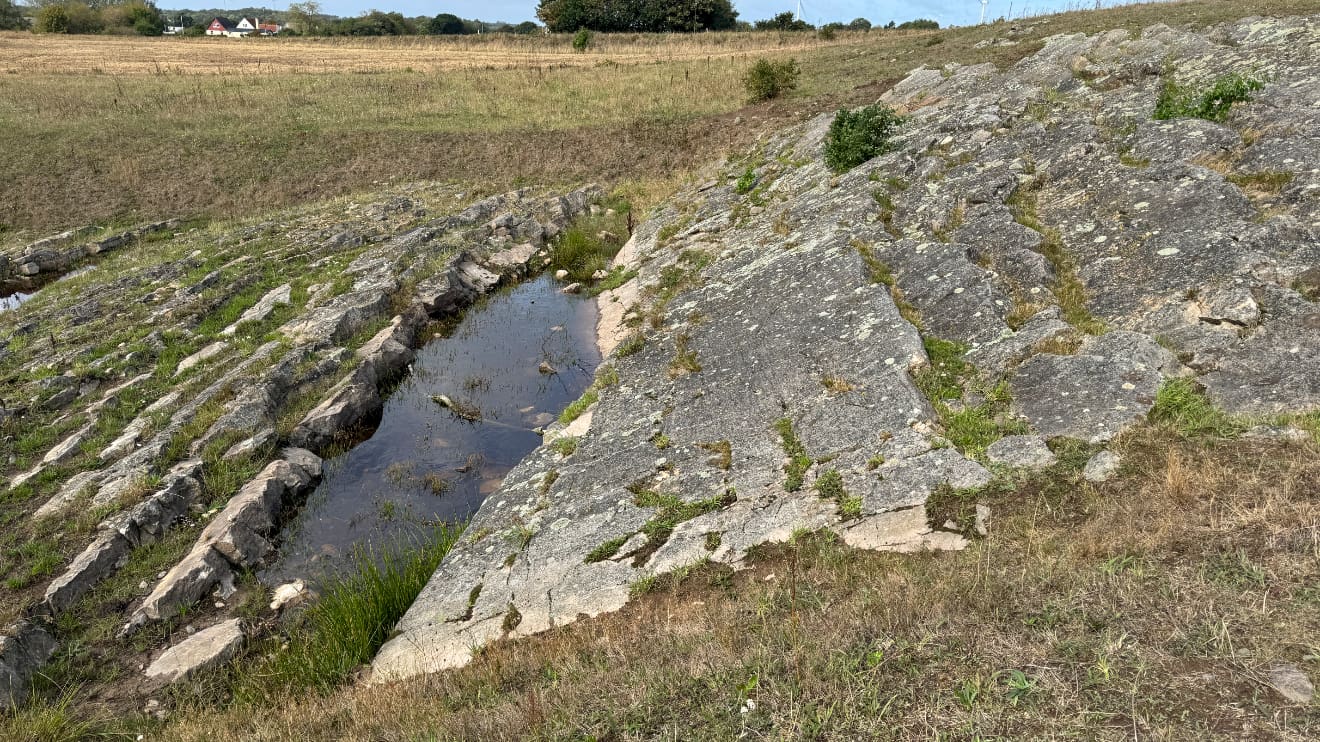
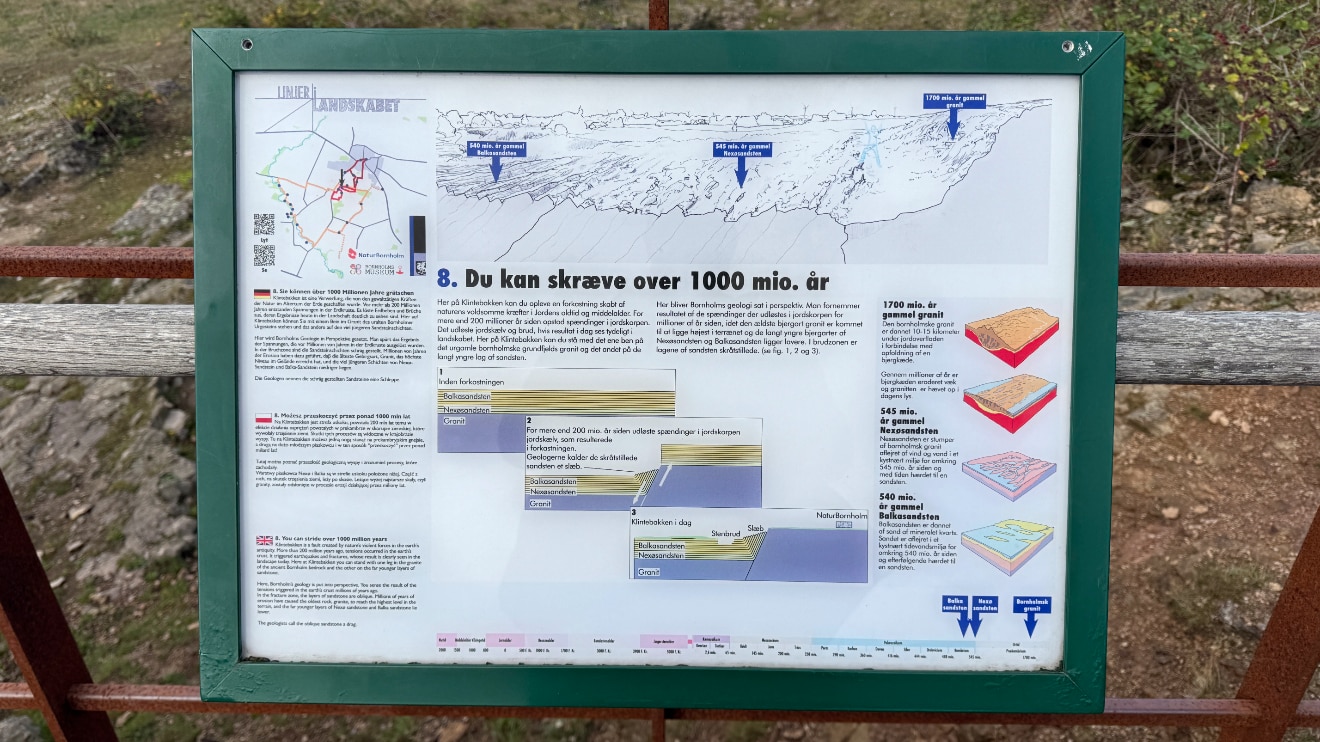
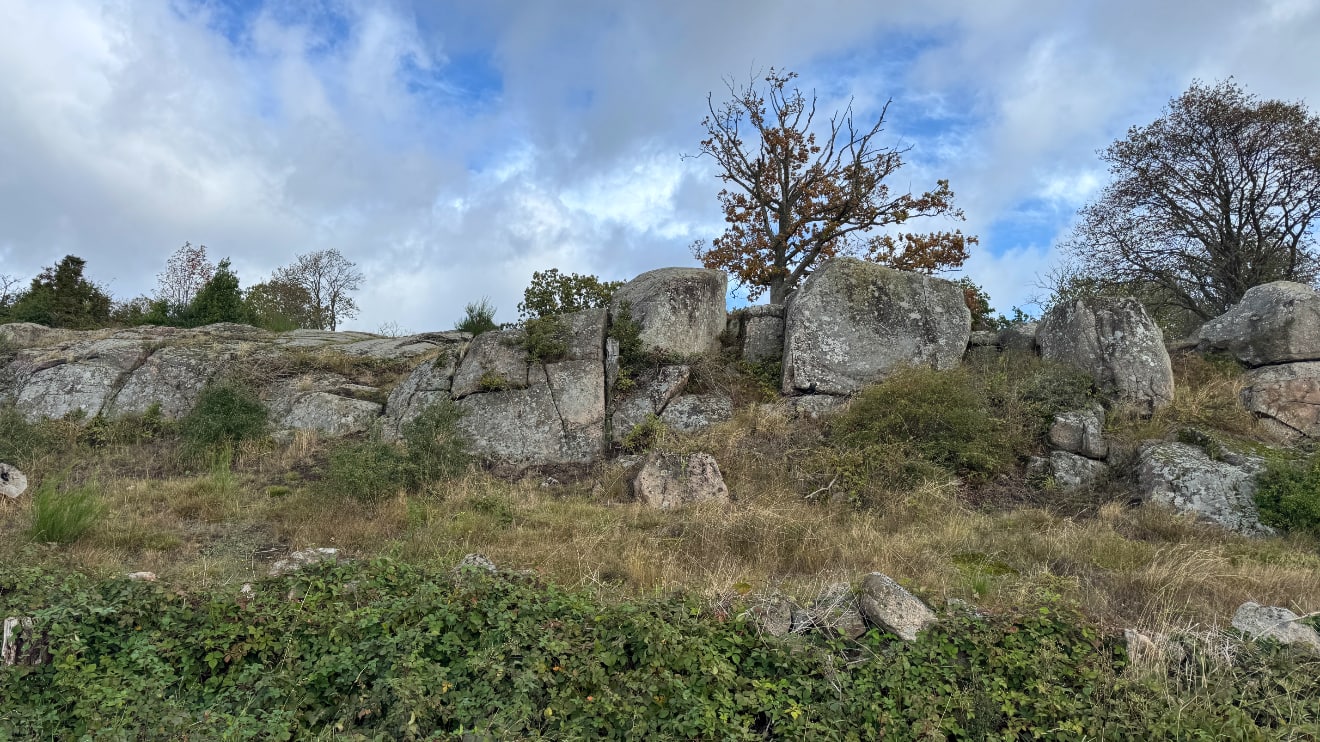
At Klintebakken, around 1.7-billion-year-old gneiss lies in direct contact with much younger sandstone. The Nexø Sandstone was formed more than 540 million years ago from sediments deposited by rivers, while the lighter Balka Sandstone – geologically part of the Hardeberga Formation – was formed in the sea at roughly the same time.
What is remarkable is not only the enormous difference in age. The ancient gneiss also lies higher in the terrain than the younger sandstone – contrary to the simple geological principle that the oldest layers normally lie beneath the younger ones. The explanation lies in the major movements that, over hundreds of millions of years, have fractured and displaced Bornholm’s bedrock.
It is therefore literally possible to stand with your feet on rocks with an age difference of more than a billion years. GEUS describes Klintebakken as a place where you can “stride across a billion years”.
The fault – the key to Bornholm’s distinctive geology
Bornholm lies at the edge of a very old and stable part of the Earth’s crust that covers large areas of Northern and Eastern Europe. Over hundreds of millions of years, forces in the crust have repeatedly created and reactivated major fractures and faults in the area.
Klintebakken lies in connection with this major tectonic transition, which forms part of the Fennoscandian Border Zone. Here you can see the results of the movements that have helped shape Bornholm.
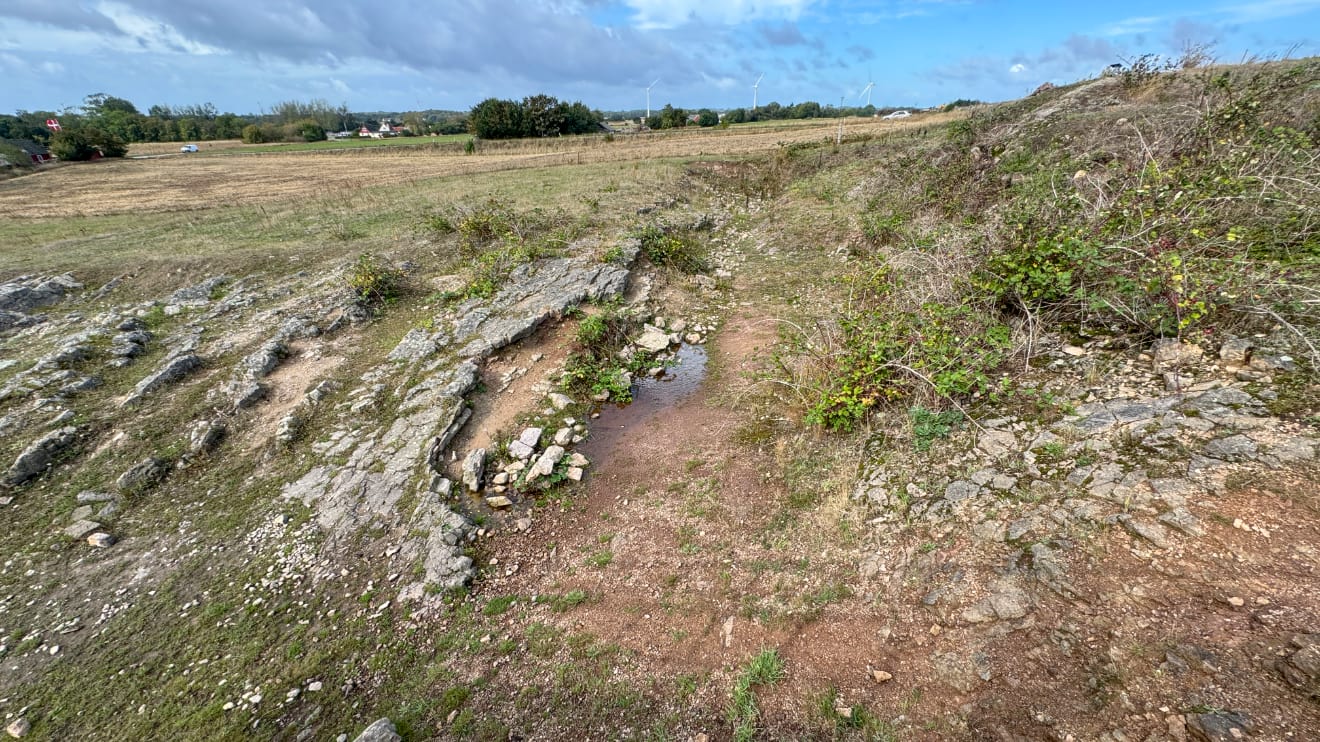
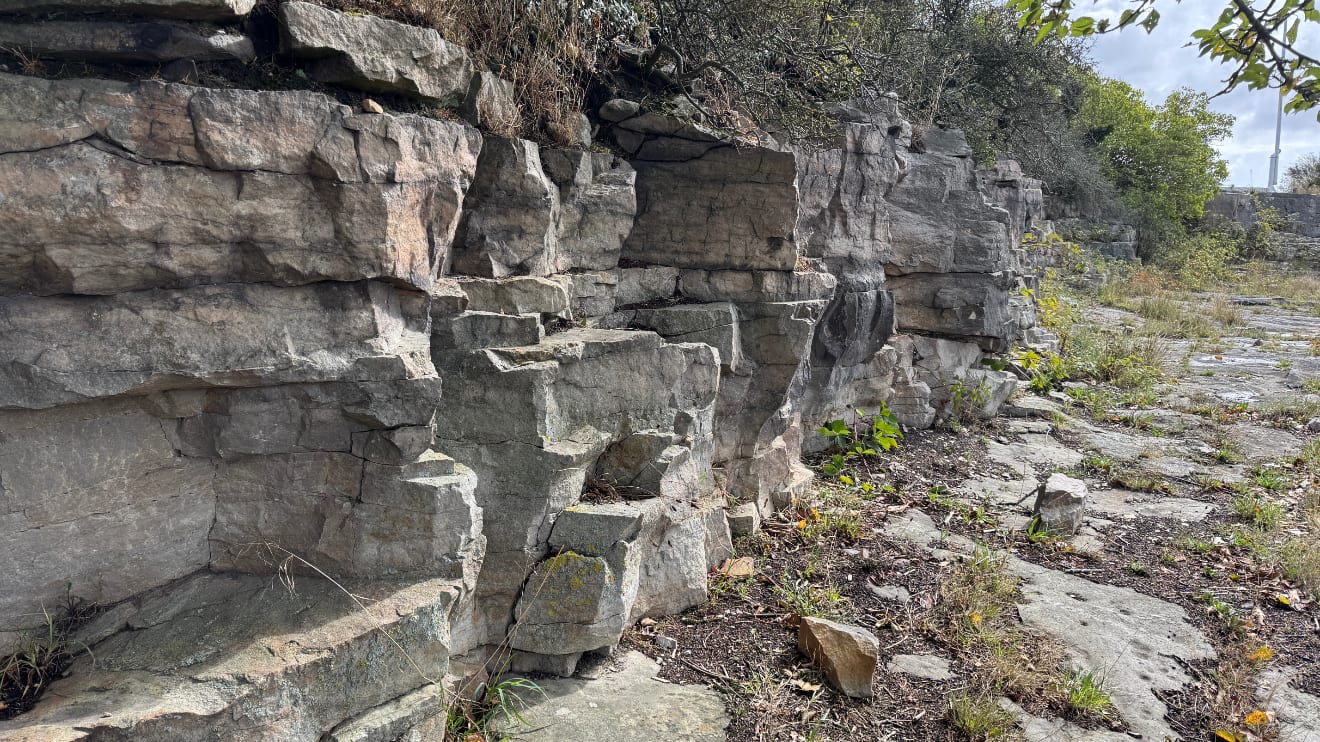
In 1999, the bedrock was exposed so that the contact between gneiss, Nexø Sandstone and Balka Sandstone can be seen in the terrain. Close to the fault itself, the sandstone layers have been compressed and tilted to an angle of up to 50 degrees – a clear trace of the forces that displaced the Earth’s crust.
Geologically, Bornholm is regarded as a horst: a block of the Earth’s crust that has been uplifted relative to its surroundings. The northern part of the island has been uplifted more than the southern part, and over millions of years of erosion, younger rocks have therefore been removed from large parts of northern Bornholm. This is an important part of the explanation for the striking contrast between the rocky north and the flatter south of the island.
Strøby Sandstone Quarry – walk on an ancient seabed
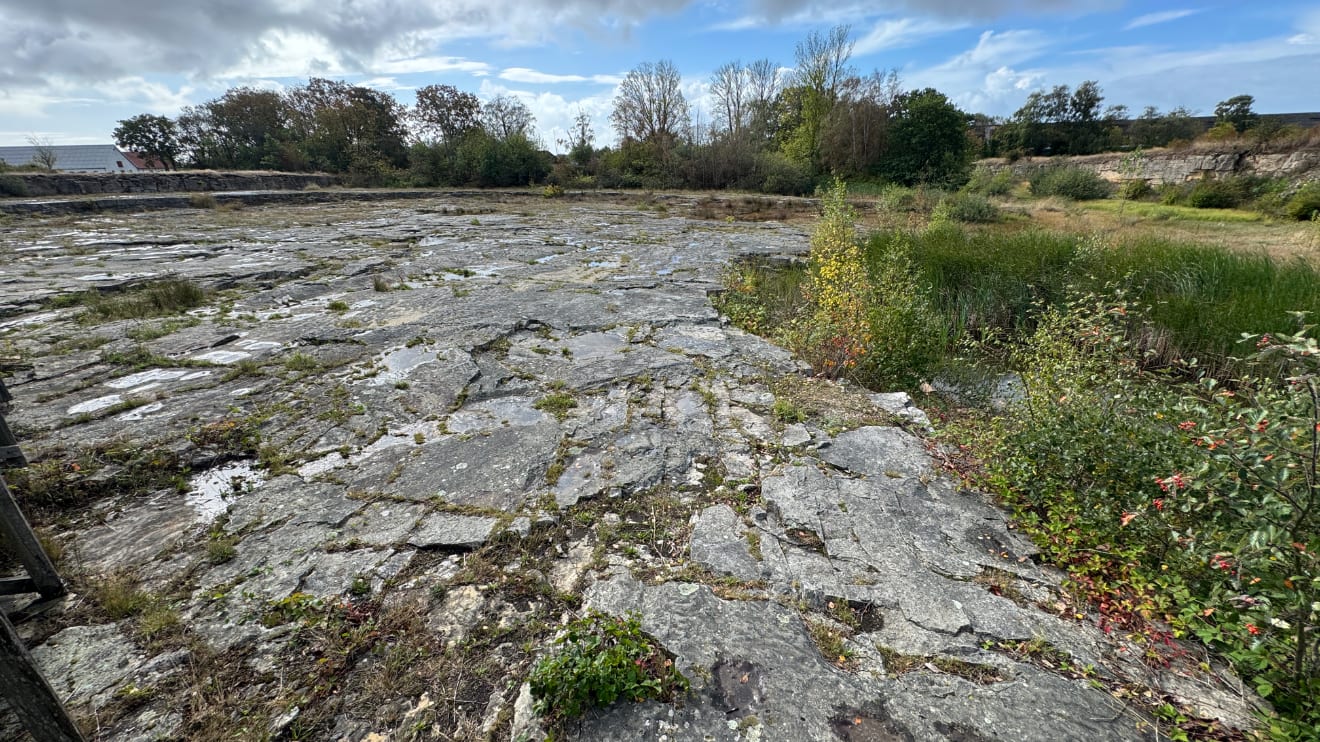
Continue a few hundred metres south and you will reach Strøby Sandstone Quarry.
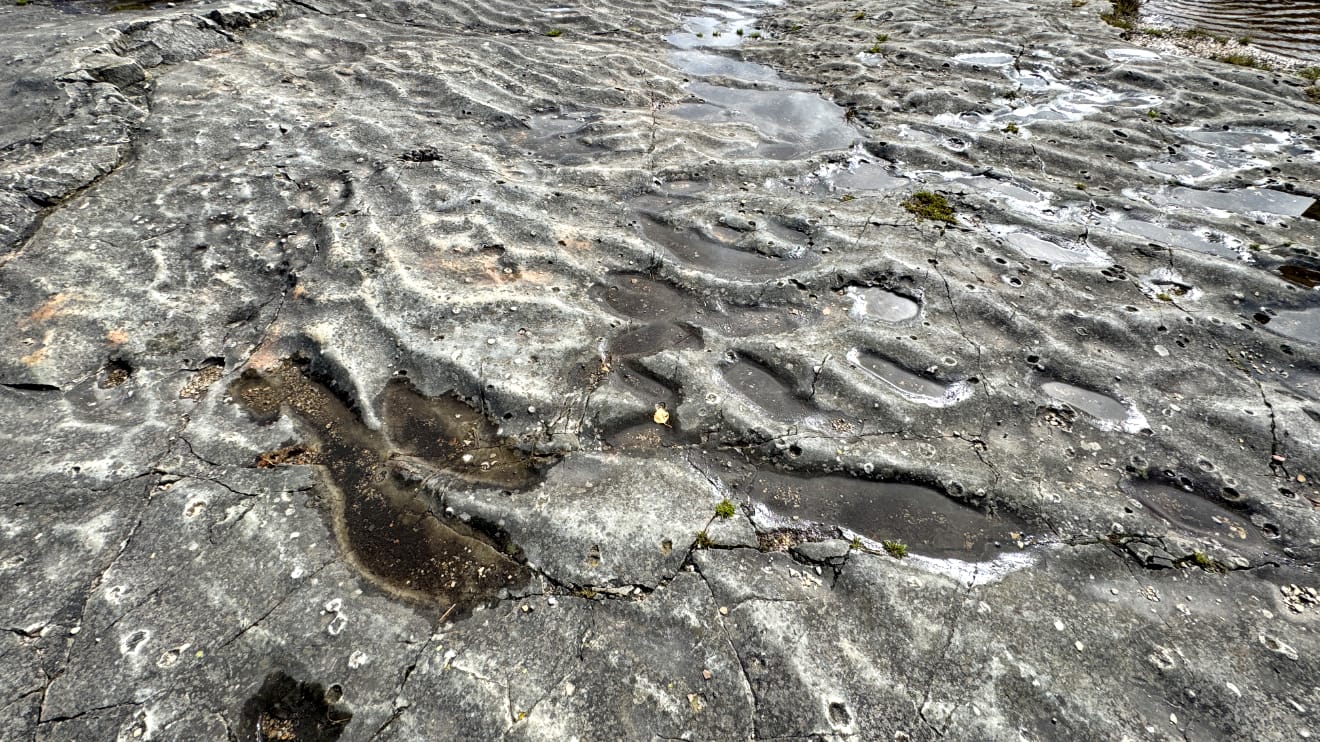
Here, the Balka Sandstone is preserved with clear wave and current ripples. The surface can resemble the sandy bottom of a modern tidal area at low tide – except that these patterns were formed around 530 million years ago.
In several places, you can also see small traces left by organisms that burrowed through the soft seabed. The animals themselves have not been preserved, but the traces of their activity have. GEUS therefore very aptly describes the area as a fossilised seabed.
This may be where the immense scale of time becomes easiest to grasp: The ripple marks you see in the rock were once formed in sand by real waves and currents.
The area is protected, so stones and sandstone surfaces should of course be left where they are.
Kyllingehønen and Hanen
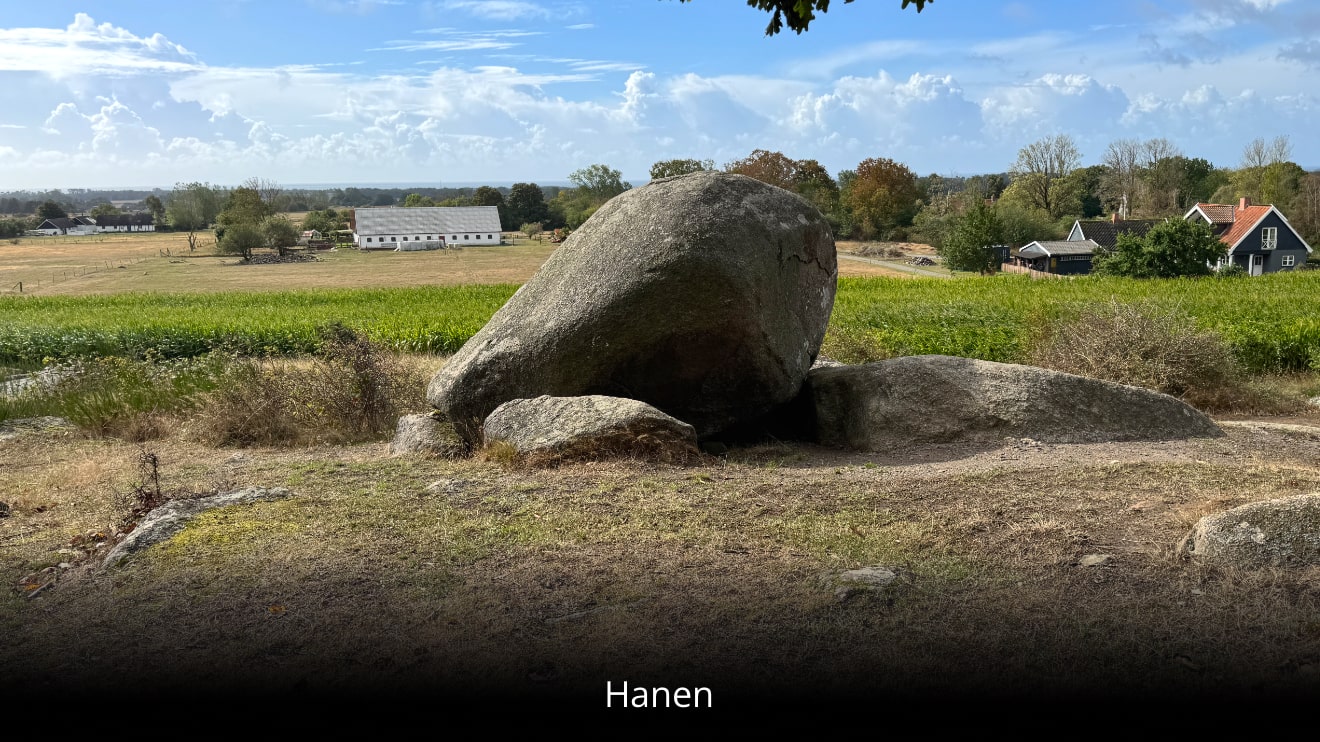
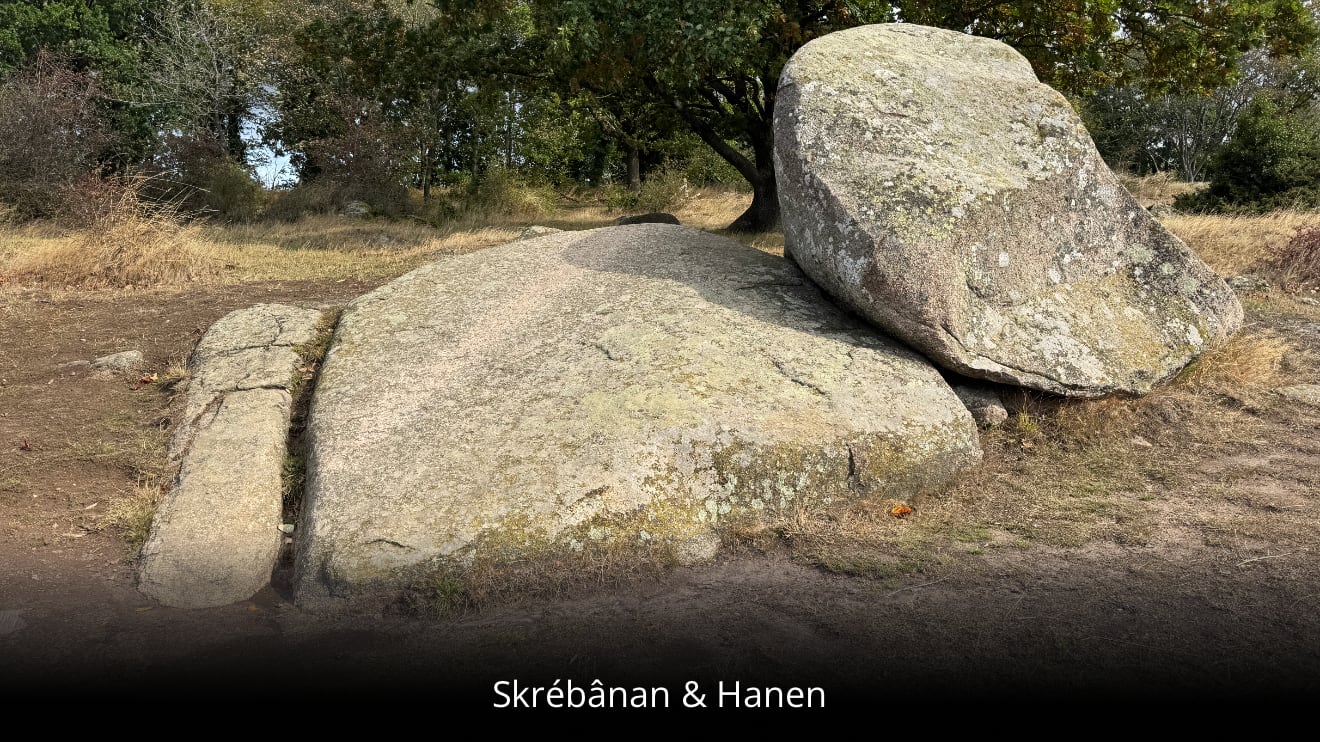
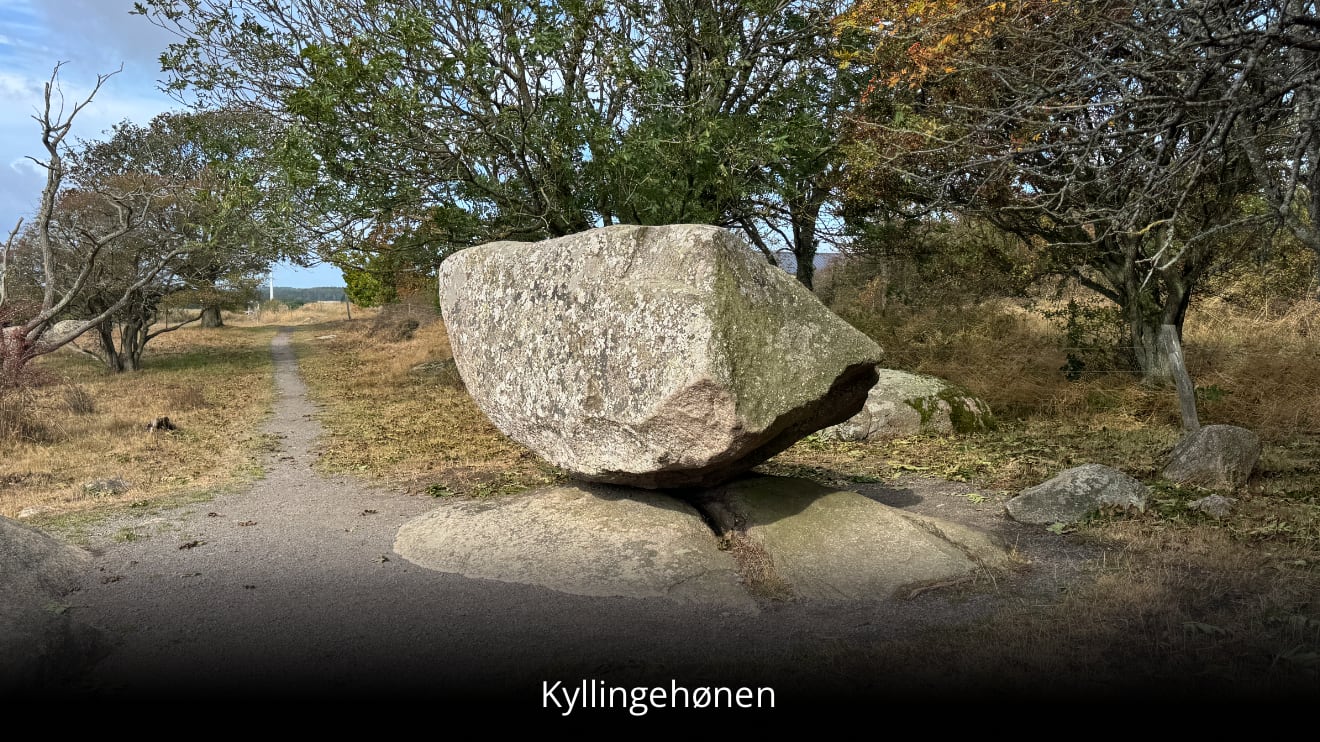
On the higher part of Klintebakken lie the two distinctive boulders Kyllingehønen and Hanen.
They are large glacial erratics that were transported by the ice and left behind when it melted. Both boulders were protected as early as 1918.
Kyllingehønen also has a place in Bornholm’s storytelling tradition. According to an old travelling legend, the stone was thrown by a troll towards Aa Kirke, but flew over the church and landed on Klintebakken, where it rests on three smaller “stone eggs”.
Here, geology meets folklore – something that seems almost fitting in a landscape where enormous stones lie scattered across the rock as traces of forces that people once had no scientific explanation for.
Skrébânan – the old sliding track
Near Hanen lies the sloping rock surface locally known as Kalvestegen.
Here there is a smooth track known as a Skrébâna, where local people have traditionally amused themselves by sliding down the rock. An old belief is also associated with the sliding track: that women could absorb some of the rock’s power by sliding down it and thereby promote fertility.
Here we move from established geological knowledge into cultural history and folklore – but it is precisely this combination that makes Klintebakken more than just a geological site.
See Bornholm with new eyes
Klintebakken tells an unusually large story within a very small area.
Here, around 1.7-billion-year-old gneiss meets sandstone that is more than a billion years younger. You can see traces of movements in the Earth’s crust, walk on a 530-million-year-old seabed, find stones left behind by the ice sheet and encounter stories from Bornholm’s folklore.
It is one of those places on Bornholm where the landscape takes on a new meaning once you know what you are looking at.
What to look for
- The fault – where the ancient bedrock meets the younger sandstone.
- The tilted sandstone layers – traces of movements in the Earth’s crust.
- Strøby Sandstone Quarry – see the preserved ripple marks in the roughly 530-million-year-old seabed.
- Kyllingehønen and Hanen – large glacial erratics left behind by the ice sheet.
- Skrébânan near Hanen – the old sliding track on the rock.
If you would like to explore Klintebakken and Bornholm’s natural history in even greater depth, we warmly recommend Finn Hansen’s extensive guide 367ture.dk – an impressive body of work on Bornholm’s nature, geology and cultural history.