Bastemose
Bastemose
– explore Almindingen’s species-rich wetland from trails, boardwalk and birdwatching tower
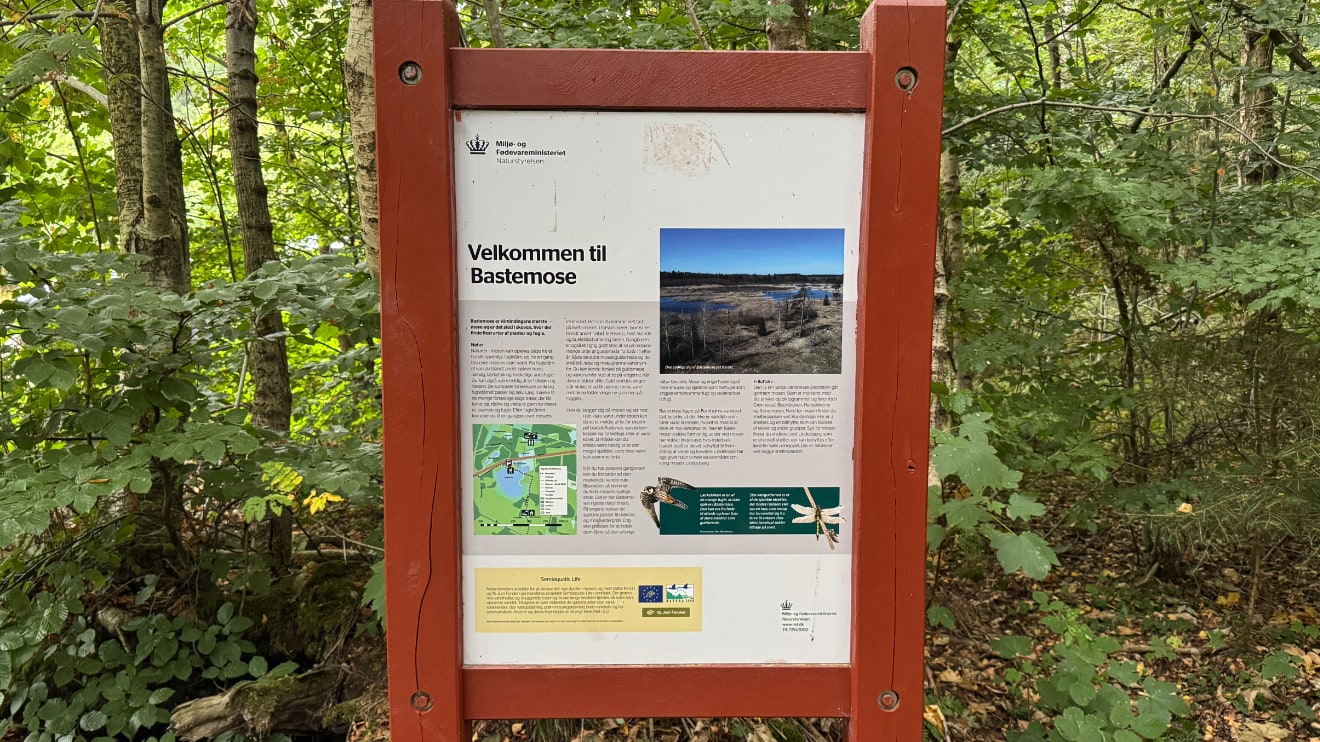
Bastemose lies in Almindingen and is the largest wetland in the area. The Danish Nature Agency also describes it as the most species-rich wetland in Almindingen in terms of birds, plants and insects.
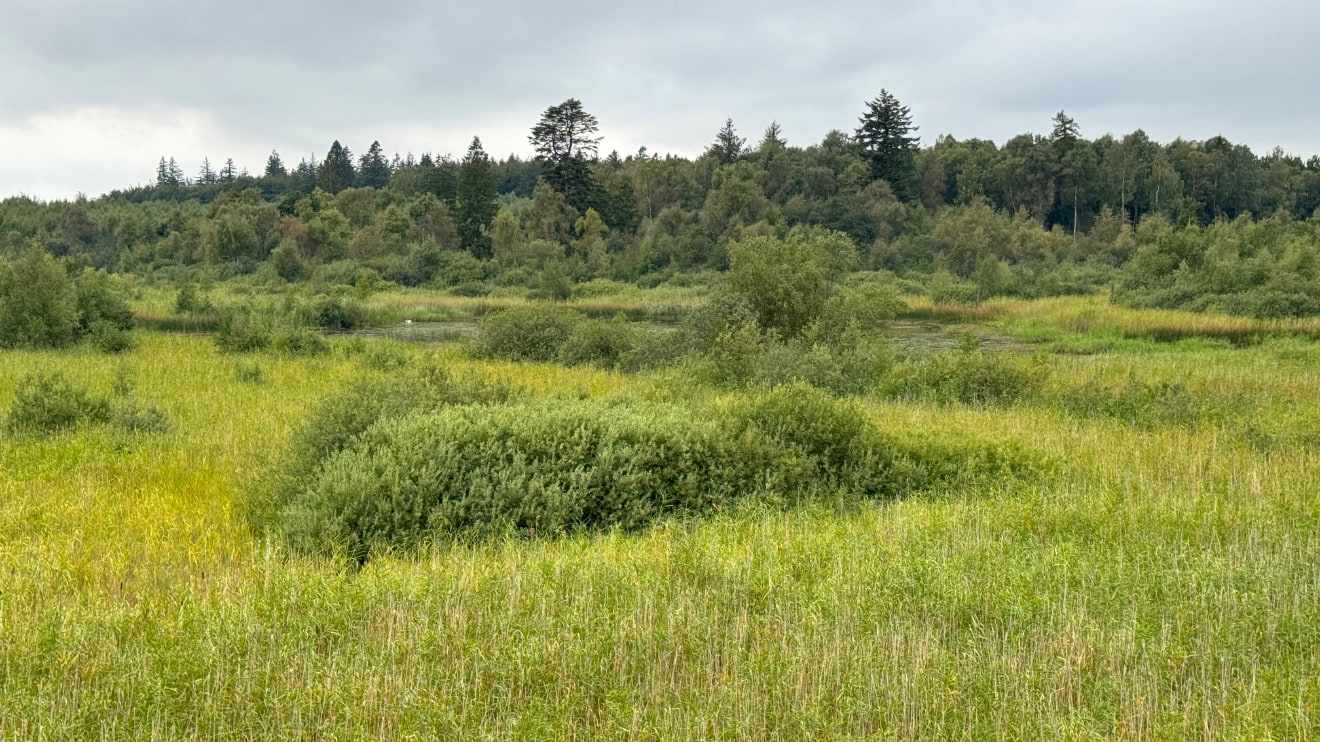
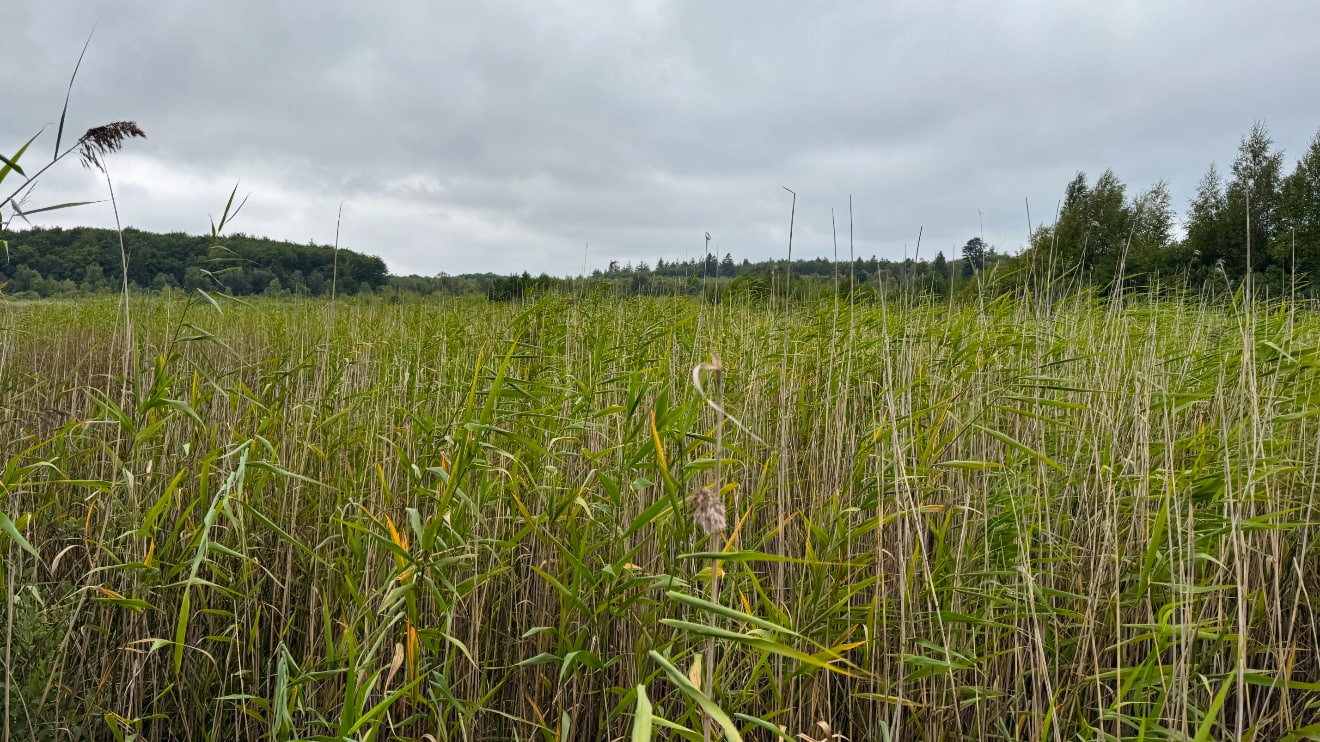
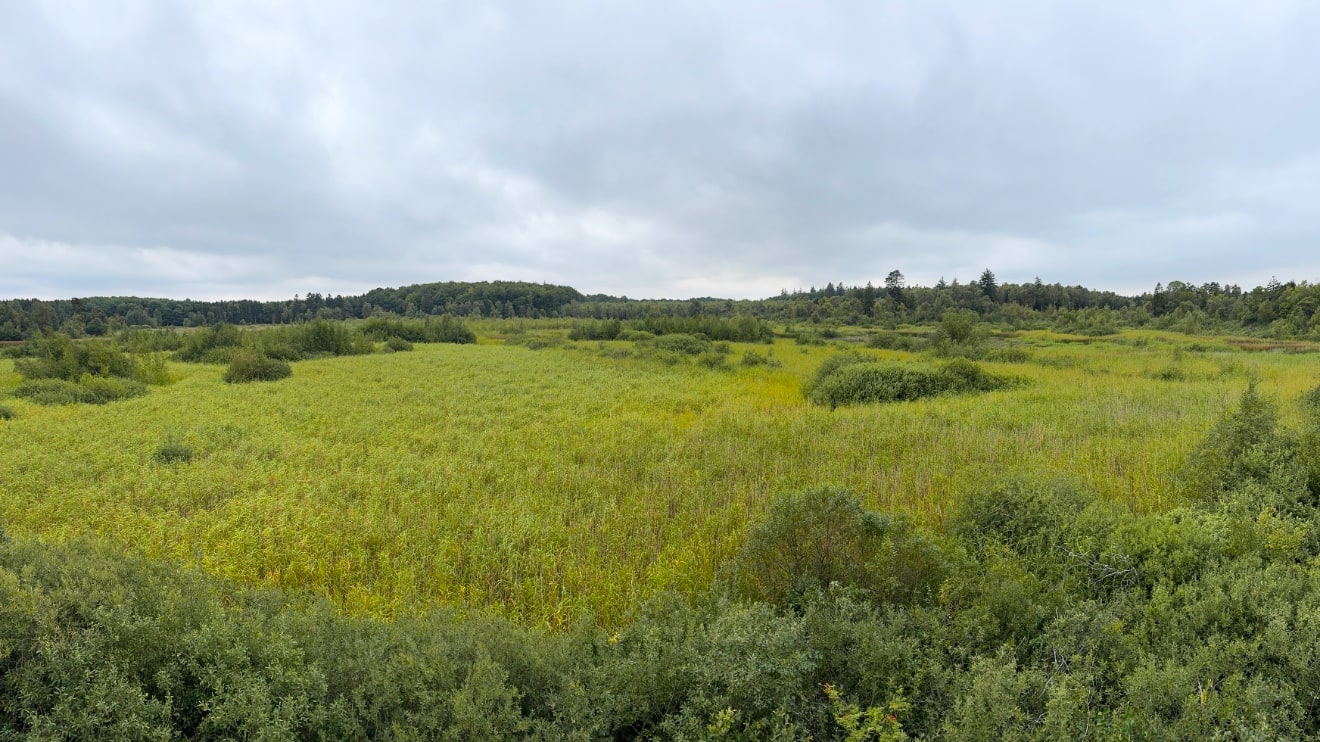
The area includes open water, reed beds, floating vegetation mats, scrub and several types of wet habitat. The wetland can be experienced from the surrounding trails, from the boardwalk through its north-eastern section and from the birdwatching tower, which provides a wide view across Bastemose.
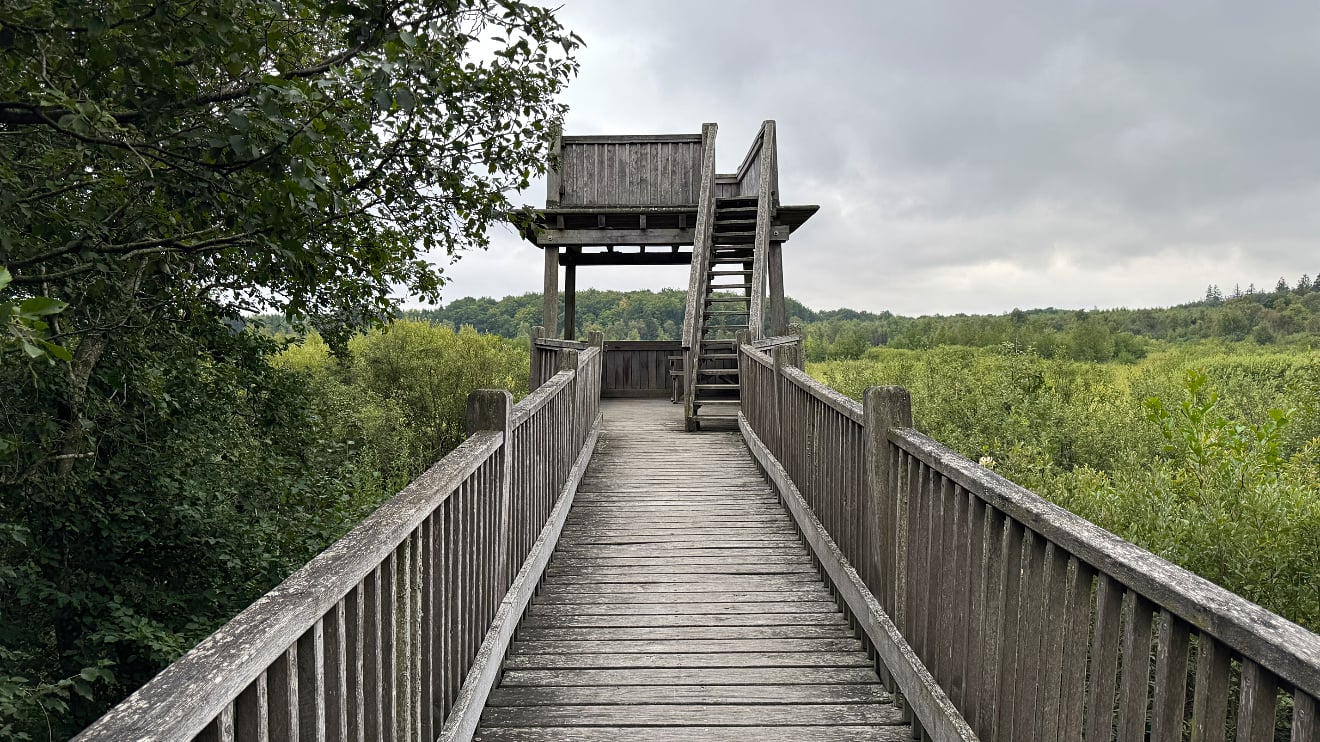
From the birdwatching tower
The birdwatching tower provides a good overview of Bastemose and is an excellent place to observe birdlife.
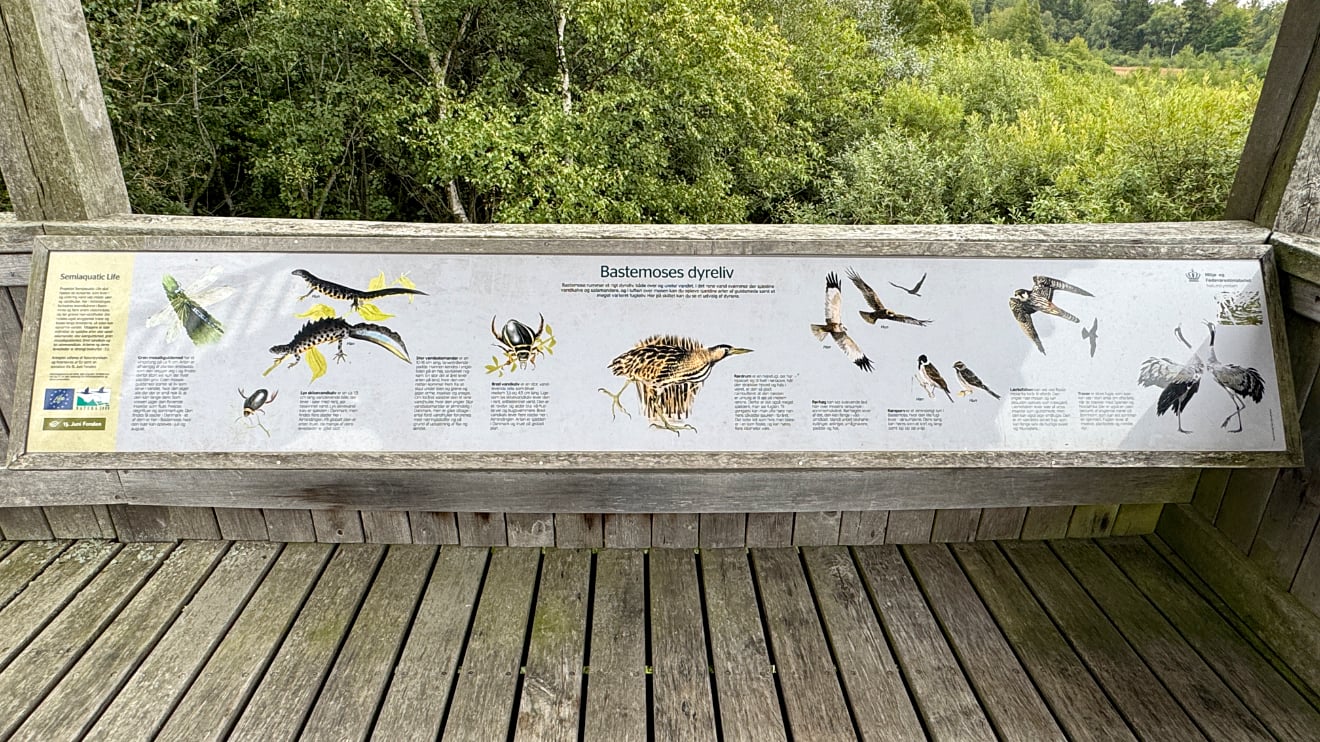
Common crane, western marsh harrier, greylag goose and mallard are among the birds that can be seen around the wetland. Osprey and white-tailed eagle are also regularly observed in the area.
Eurasian bittern breeds at Bastemose, although it is often easier to hear than to see. Its deep booming call can be heard from the reed beds. Other breeding birds include western marsh harrier, common crane and bearded reedling.
Bastemose is an important birdwatching site. Around 180 different bird species have been recorded here over the years in DOFbasen, the observation database of the Danish Ornithological Society.
Out onto the boardwalk
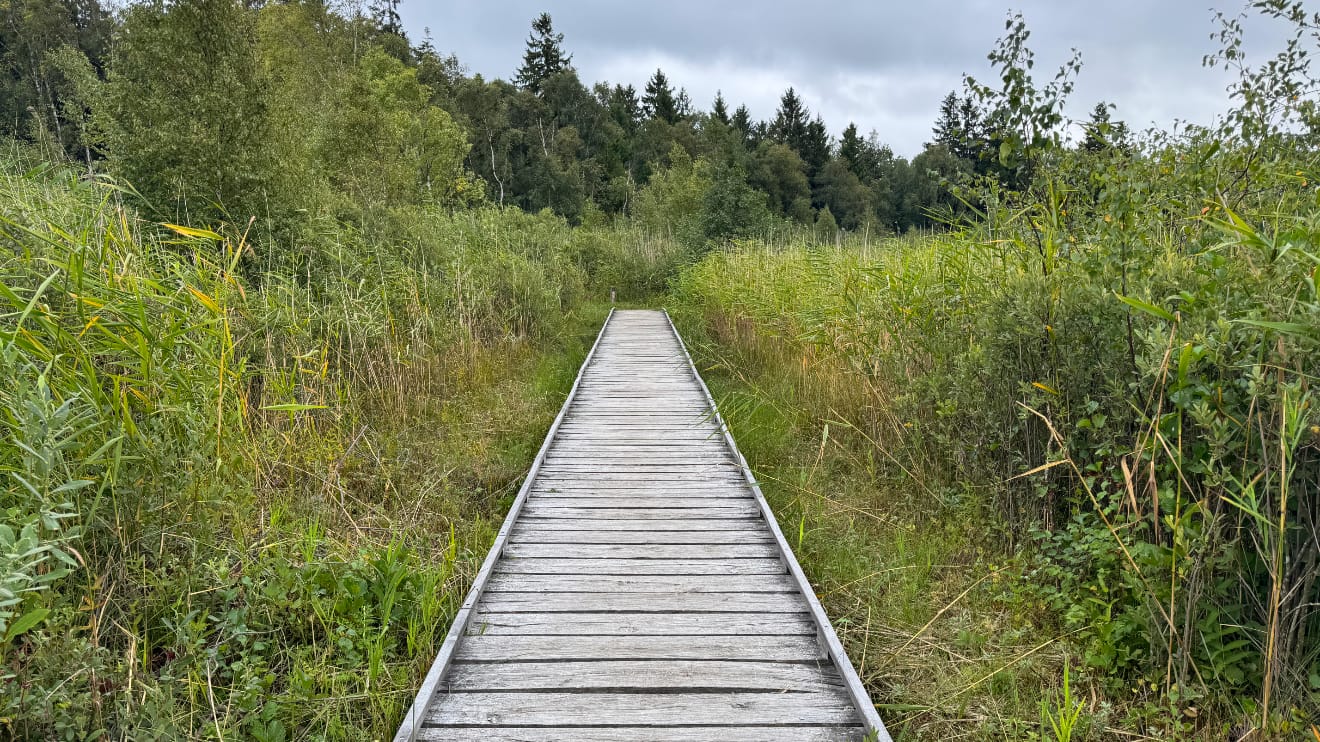
The boardwalk runs through the north-eastern part of the wetland and allows visitors to get close to both the water surface and the vegetation. It was established in connection with restoration and clearing work in parts of Bastemose in 1973.
Plants growing close to the boardwalk include white water-lily, water soldier, water horsetail and bogbean. In summer, this part of the wetland is also particularly good for spotting dragonflies and damselflies.
One of the more notable species is the green-eyed hawker. It is closely associated with water soldier, and its larvae live among the leaves of the plant. Bastemose is also a breeding site for the rare pygmy damselfly.
The Danish Nature Agency highlights the boardwalk as one of the best places in Denmark for observing dragonflies.
A wetland in gradual change
Bastemose is a shallow lake and wetland system. The open water covers around 12 hectares, and the lake reaches a depth of approximately one metre.
The wetland is gradually becoming overgrown. Islands of floating vegetation slowly spread across the lake and are eventually colonised by young wet woodland. Elsewhere there are dense stands of reeds, while willow and birch form scrub around the wetter sections.
A walk around Bastemose therefore passes open water, reed beds, floating vegetation and areas at more advanced stages of overgrowth.
An unusually rich animal life
Some of Bastemose’s most interesting wildlife is found below and just above the water surface.
The great diving beetle Graphoderus bilineatus and the broad diving beetle Dytiscus latissimus both occur in the wetland and have only a small number of known habitats in Denmark. Both species are also among the species for which the Natura 2000 site around Almindingen has been designated. Medicinal leech is also found in Bastemose.
Dragonflies and damselflies are particularly well represented. In addition to the green-eyed hawker and pygmy damselfly, several other species occur around the water.
On mild June evenings, visitors may also be fortunate enough to see glow-worms shining along the trails near the northern part of the wetland.
A varied plant life
The open water and damp areas around Bastemose support a varied plant life.
Common reed, string sedge, water soldier and white water-lily are among the more conspicuous species, while rarer plants can also be found around the wetland.
These include western marsh orchid, narrow-leaved helleborine and common twayblade. The very rare round-leaved wintergreen has also been recorded at Bastemose.
Walking around Bastemose
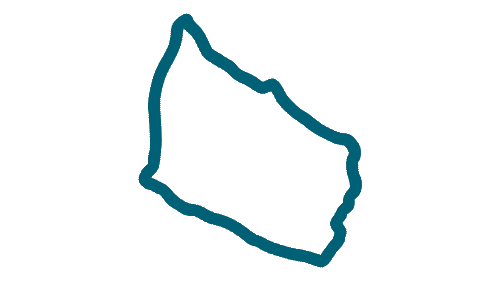
A network of trails leads around the wetland, and from the birdwatching tower it is possible to continue across the boardwalk and farther into Almindingen.
The yellow-marked trail crosses the boardwalk and continues towards Lindesbjerg, where there is also a shelter and a fire site.
Bastemose can therefore be visited on a shorter walk around the wetland itself or included in a longer hike through Almindingen.