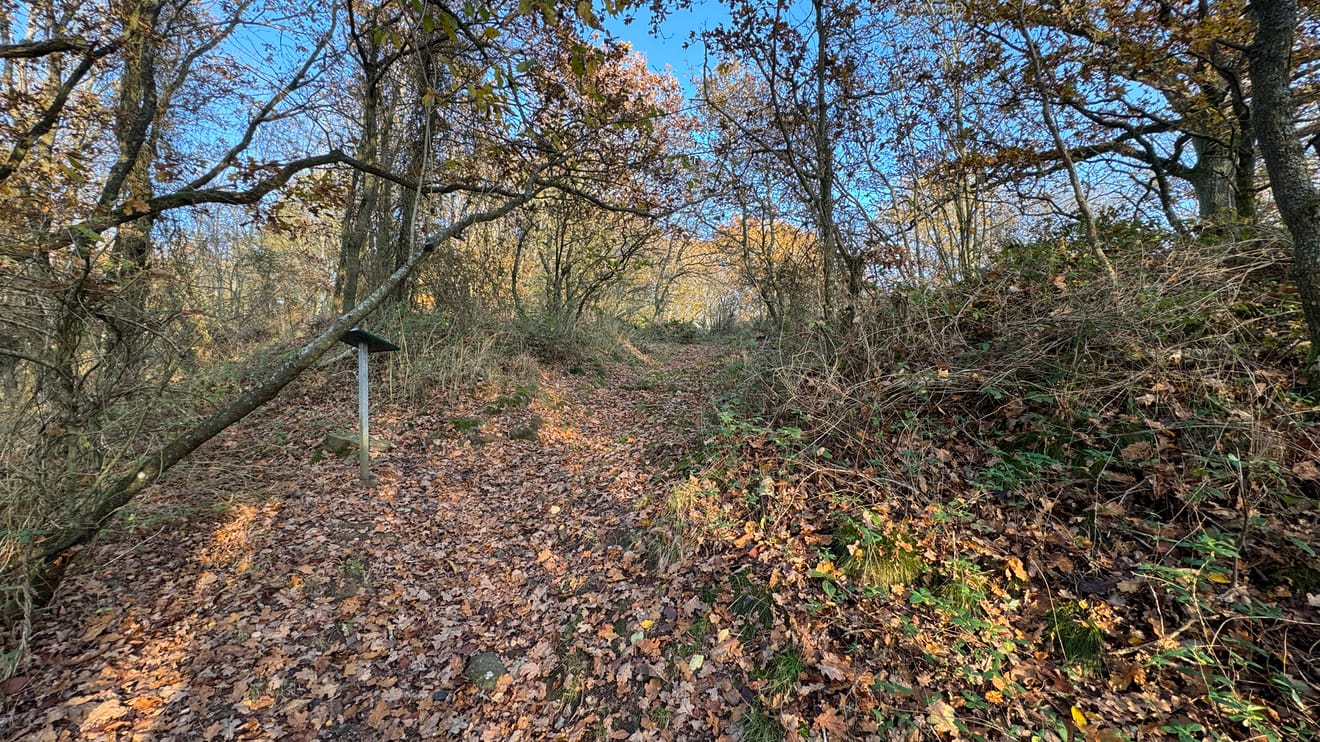
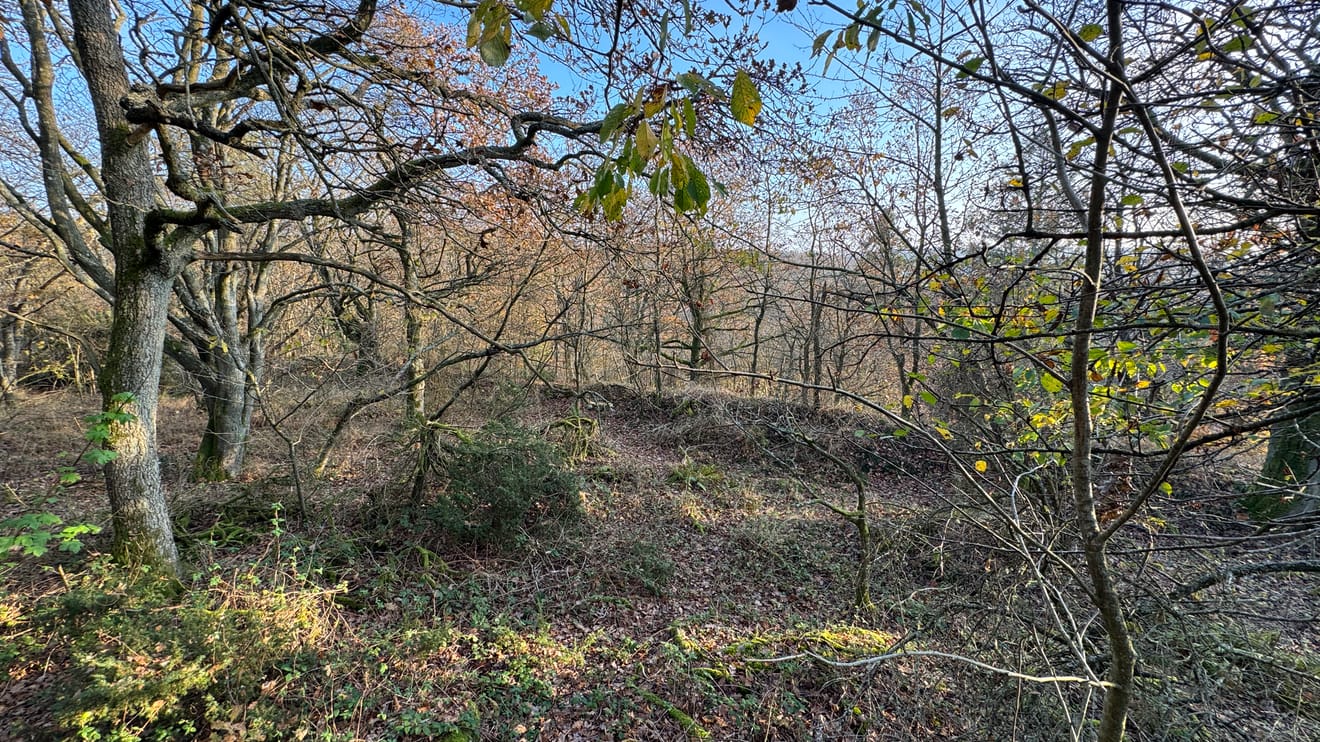
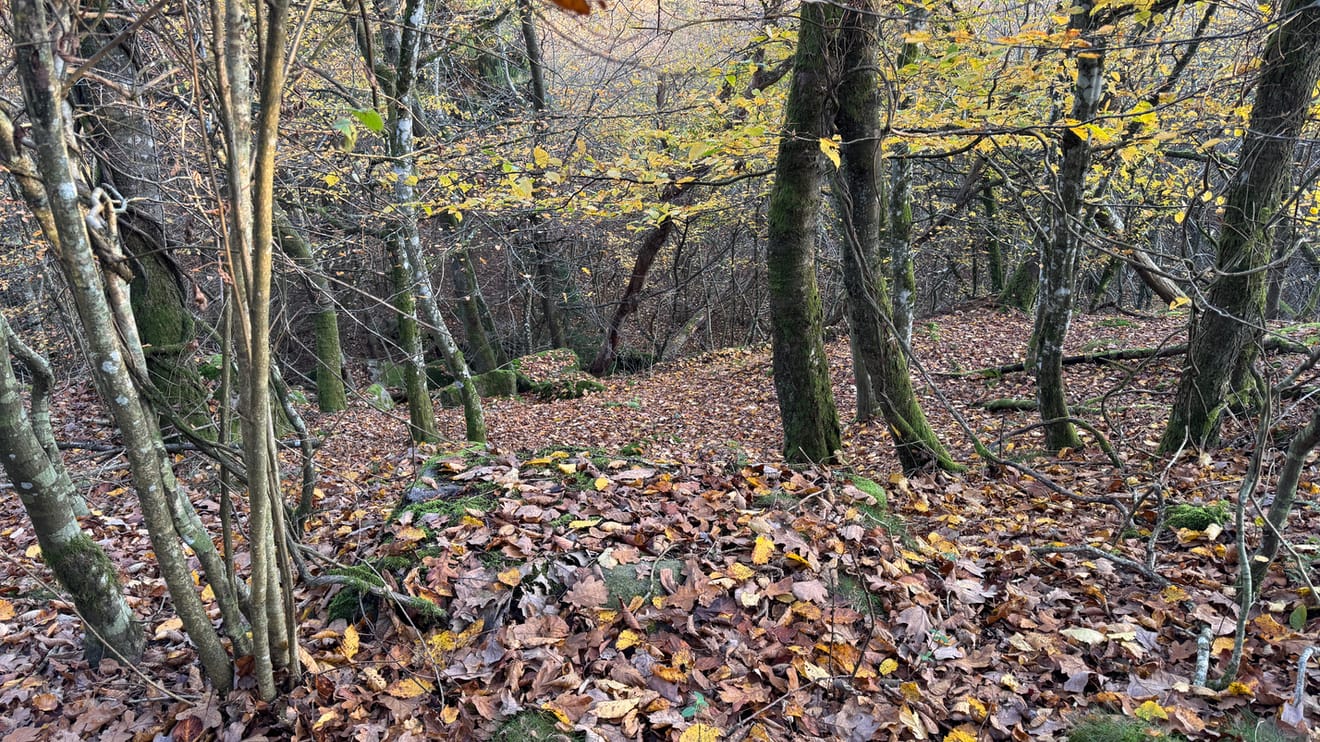
Gamleborg in Paradisbakkerne is an ancient refuge fortress believed to have been built around AD 200 during the Iron Age, and it remained in use until around 1000 AD. The fortress is located in the southern part of Paradisbakkerne, northwest of Nexø. It was strategically placed on a plateau, surrounded by natural defenses such as cliffs and a former lake, Borgesø, which helped protect the fortress from attacks from the north.
Gamleborg was enclosed by a wall of earth and stone, with some sections reaching the height of a man. Today, visitors can still see remnants of the wall and a collapsed gatehouse on the northern side. Inside the fortress area, there is a small pond, which once served as a water reservoir.
The fortress was protected as a historical monument in 1899, and it has since been studied by archaeologists, most recently by the National Museum in the 1950s. The combination of Gamleborg’s history and the beautiful surrounding nature makes it a popular destination for hikers in Paradisbakkerne.