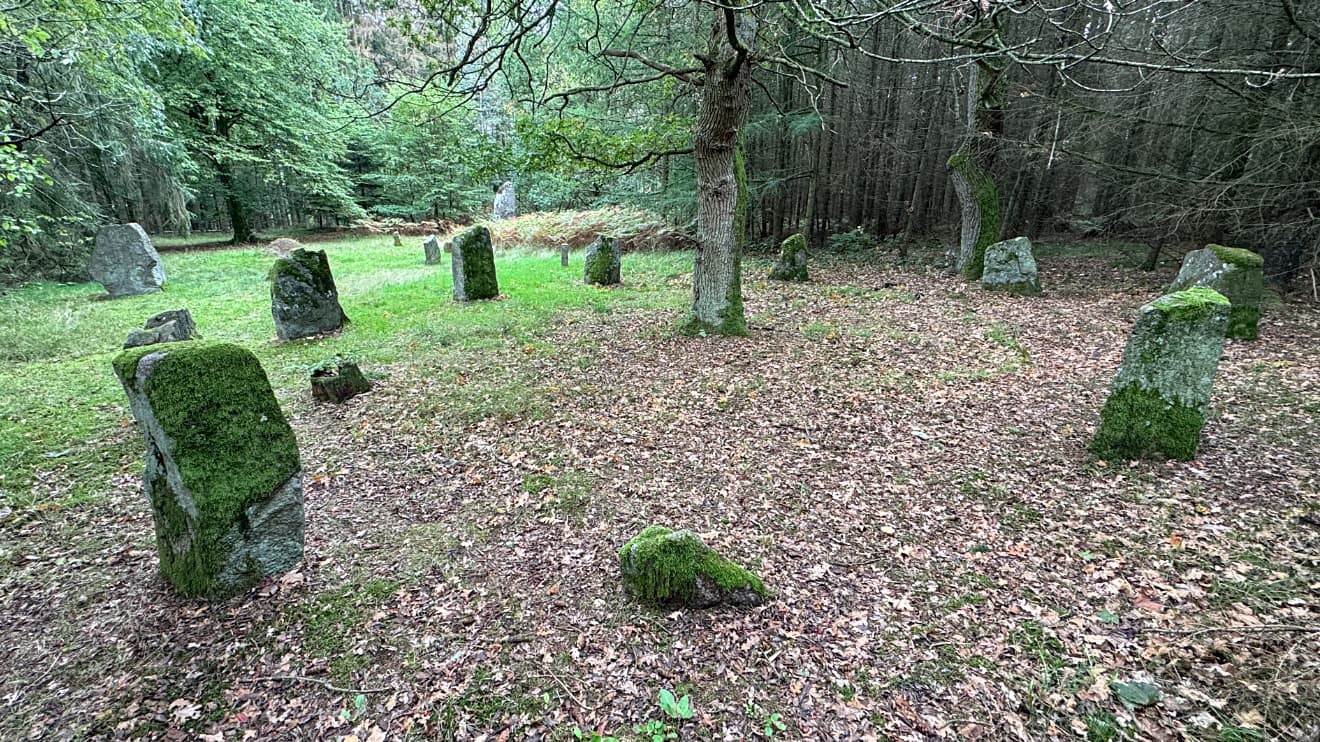
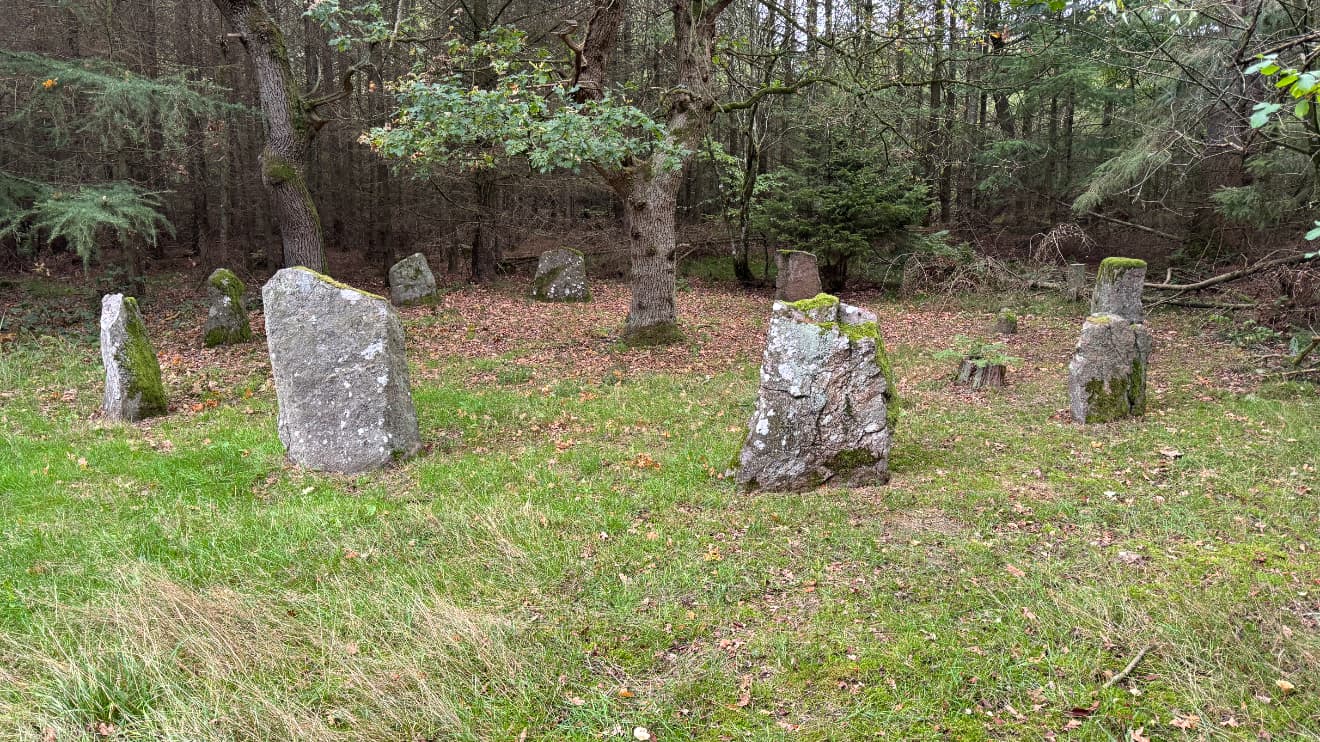
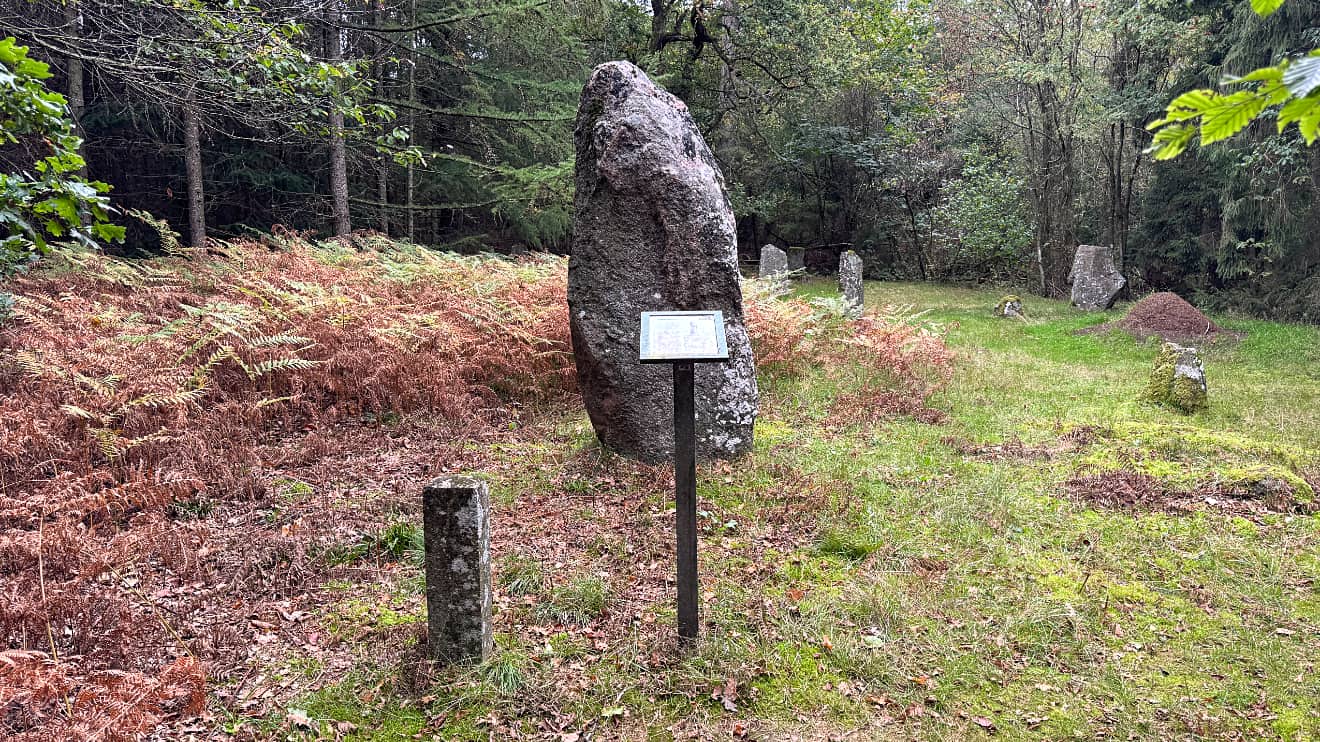
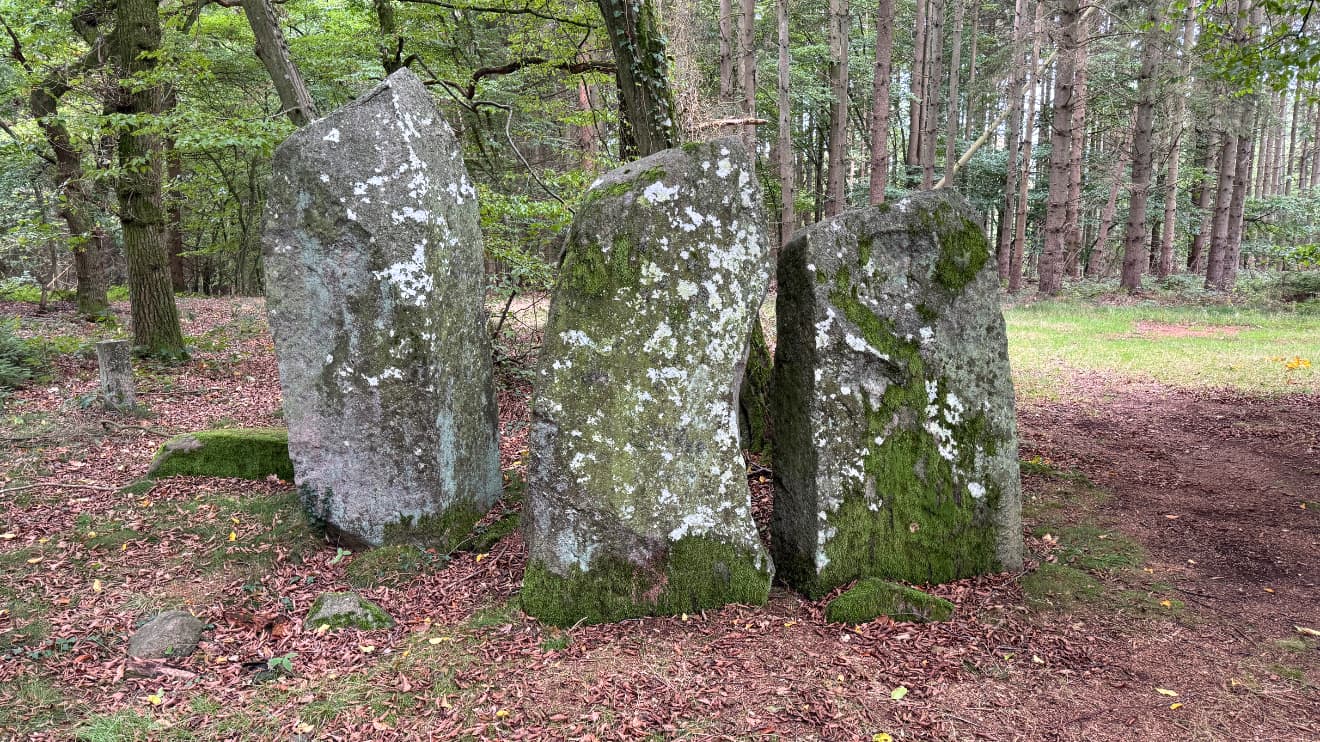
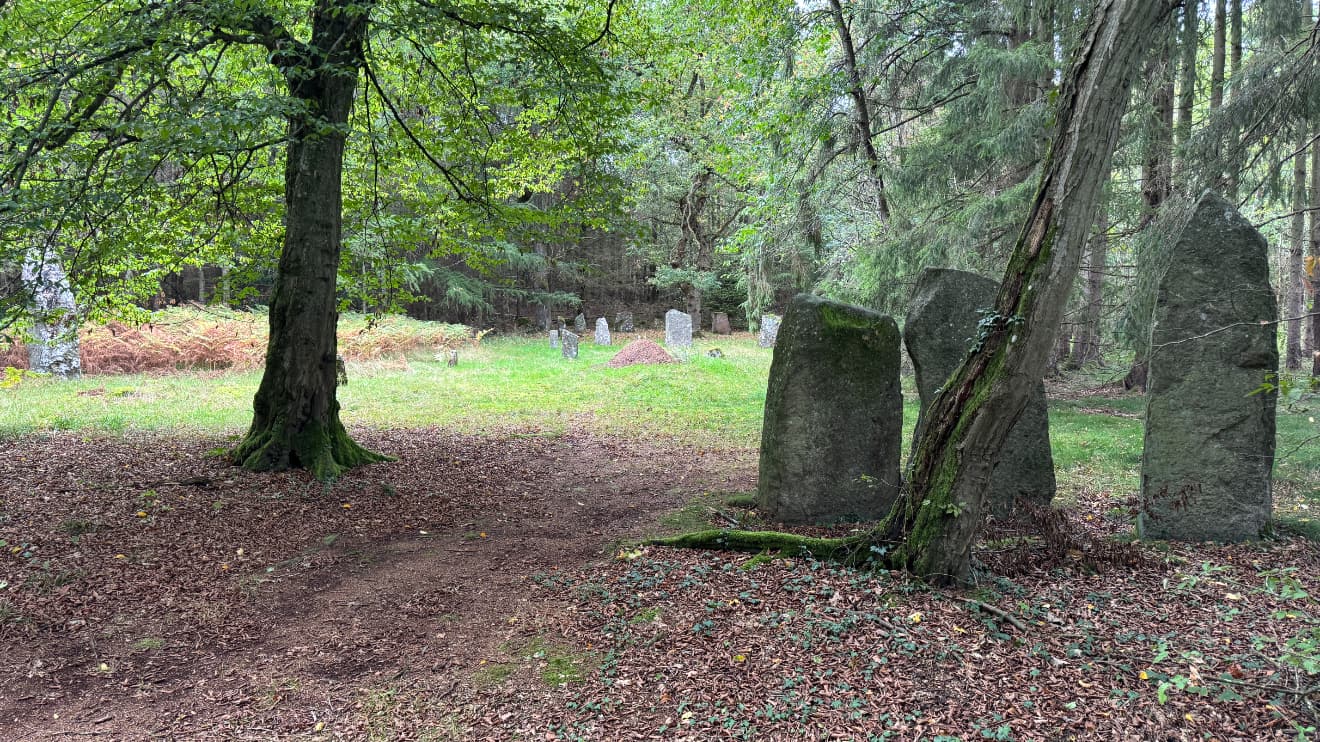
Hjortebakken in Bodilsker is a remarkable prehistoric site with a group of standing stones dating from ancient times. The site is also known as Skovgårdslunden and today contains both larger free-standing stones and a distinctive circle of nine smaller, flat stones – a so-called stone circle or “judges’ circle”.
The circle measures about 9.5 metres in diameter. During an archaeological investigation in 1956, burnt human bones and pottery fragments were found within the stone circle. The finds indicate that the monument was connected with a cremation burial from the later Iron Age, probably dating from around AD 400–750. This type of stone circle is unusual in Denmark and is known there only from Bornholm, while similar monuments are considerably more common in Scania.
Standing stones were typically erected as memorial stones in connection with graves, although they could also stand without an actual burial as monuments to the dead. Bornholm has an unusually large number of them, and Hjortebakken, together with places such as Gryet, is among the island’s notable areas for this type of prehistoric monument. The standing stones at Hjortebakken were protected as early as 1878.
Hjortebakken also has a very different place in Bornholm’s history. According to older accounts, the island’s last red deer stag was shot here in 1785 – an event said to have given the hill its name. A local tradition also links the white deer in Dyrehaven north of Copenhagen with animals from Bornholm that were once captured and sent to the king’s deer park, although this connection should be regarded as tradition rather than securely documented ancestry.