Kultippen
Kultippen
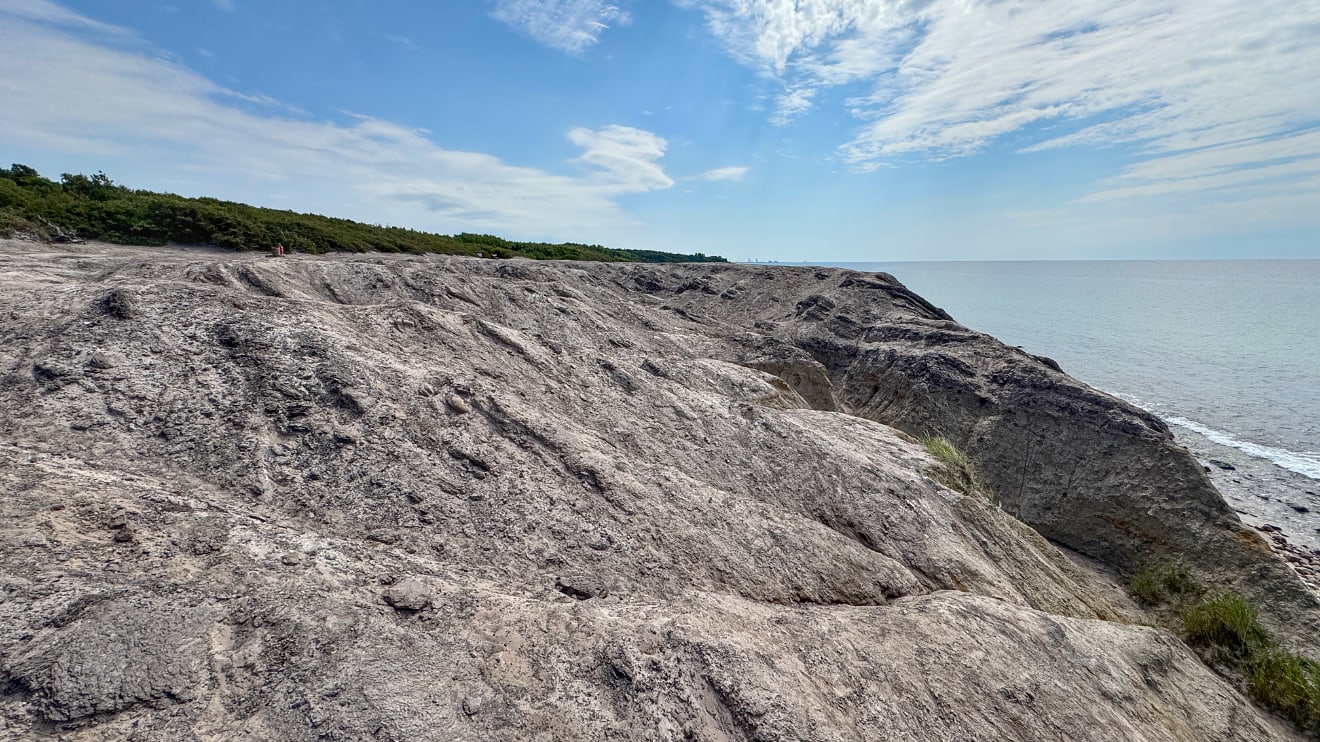
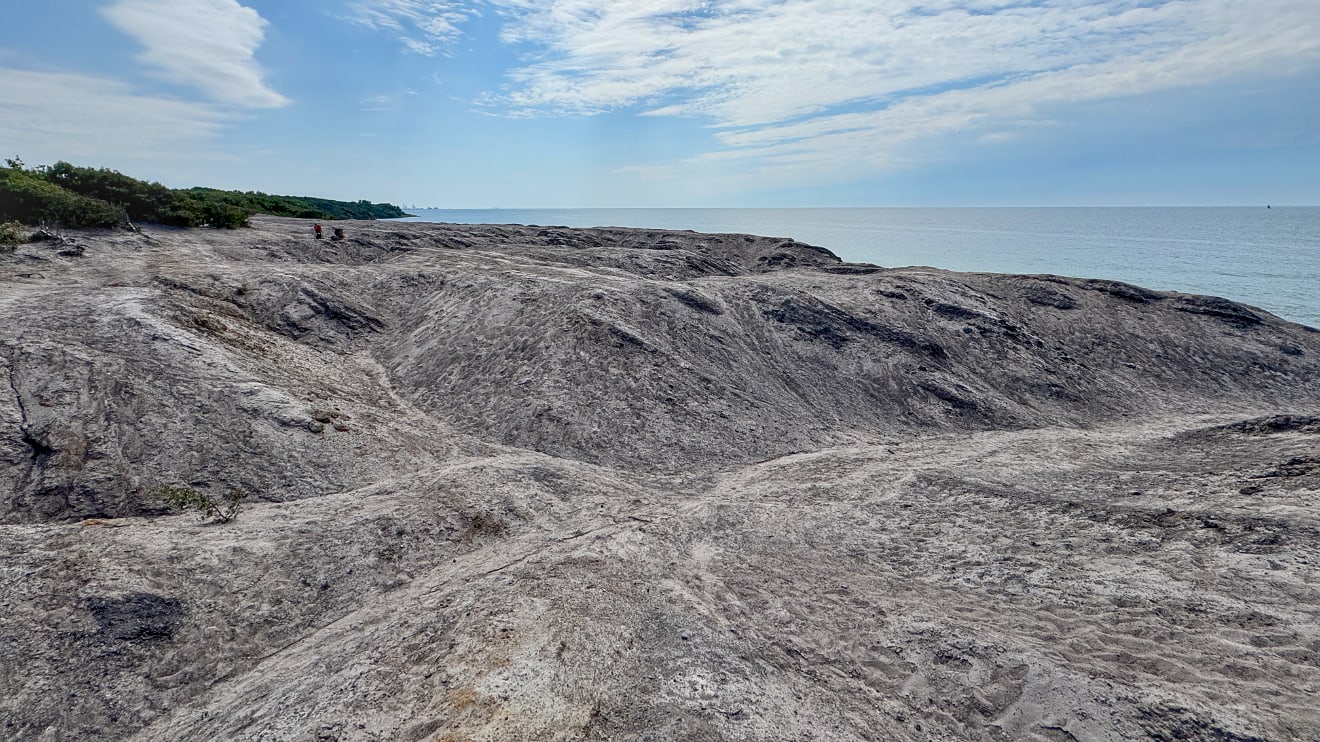
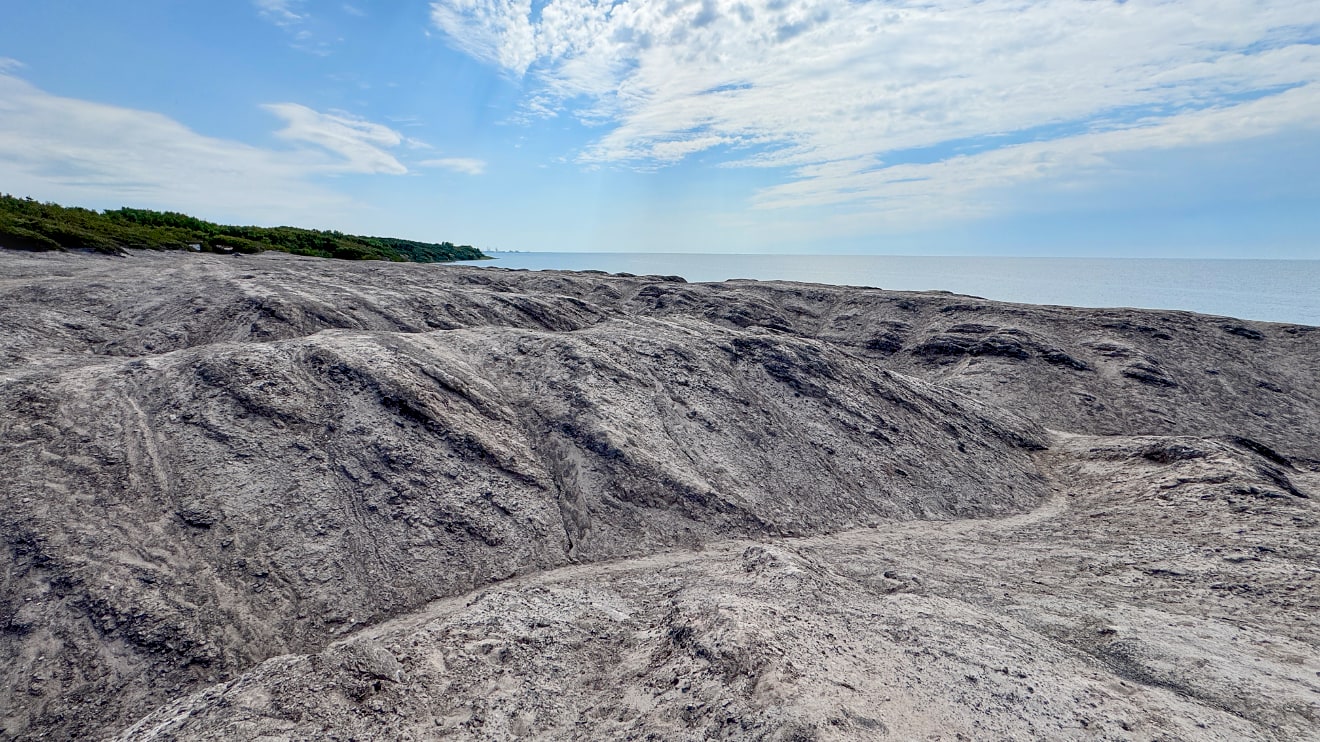
South of Hasle, Kultippen forms a striking contrast to the green coastal landscape. Here, the forest opens onto dry, almost desert-like terrain with pale-grey slopes, rust-coloured surfaces and deep channels carved by rainwater through the loose layers of earth. Vegetation is sparse, and the open landscape stretches all the way to the Baltic Sea. It may resemble an unusual natural phenomenon, but Kultippen was created by Bornholm’s industrial history.
During coal mining near Hasle in the 1940s, the coal was separated from large quantities of sand, gravel, clay, coal dust and other waste material. The material was loaded into tip wagons, transported to the coast and tipped over the edge. Layer by layer, the artificial headland grew, and the name Kultippen refers to this method of depositing the material. A display of tip wagons at the site now recalls the form of transport used during the work.
Its distinctive appearance is not only due to the large quantities of excavated material. The deposits contain, among other things, the mineral pyrite, also known as iron pyrite or fool’s gold. When pyrite is exposed to oxygen in the air and rainwater, the mineral oxidises, and acids and iron compounds may form. This contributes to a highly acidic environment in which few plants are able to take root. At the same time, the iron compounds help create the rusty-red, yellowish and brown tones visible across the terrain.
Over time, rainwater has cut channels and gullies through the loose deposits, and erosion continues to alter the character of the landscape. Kultippen is therefore not simply a preserved industrial relic, but a place where man-made layers of earth are slowly reshaped by natural processes.
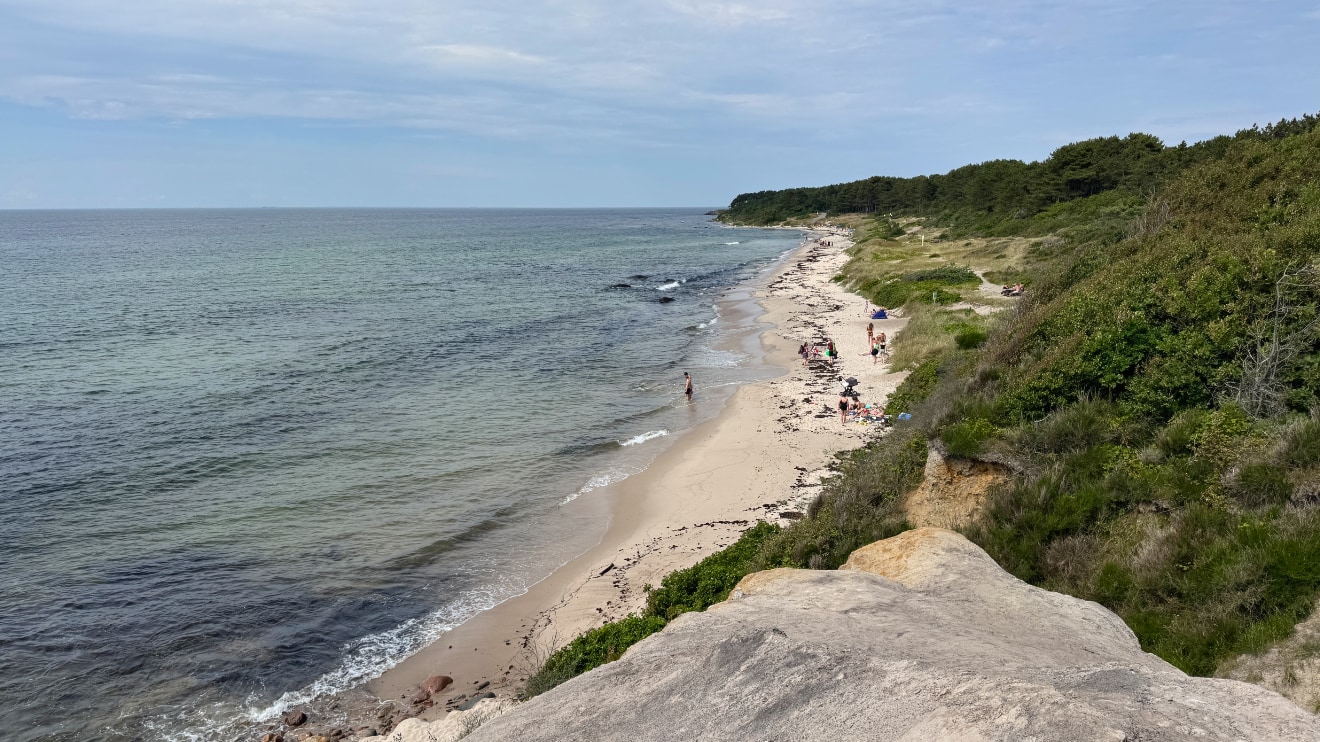
The contrast is an essential part of the experience. On one side lies the green woodland of Hasle Lystskov, on the other the open sea, and between them stretches the almost vegetation-free terrain. The uneven heights offer views across the Baltic Sea, and in the evening the site opens towards the sunset in the west.
Kultippen is both a striking trace of Bornholm’s coal industry and a place where industrial deposits, chemical weathering and erosion can be experienced directly in the landscape. Here, the waste material of an earlier age has become one of Bornholm’s most distinctive man-made natural phenomena.