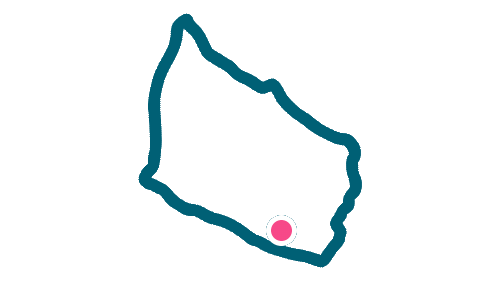
Rispebjerg near Pedersker is one of Bornholm’s most remarkable archaeological sites. On the elevated headland beside the Øle River, traces of a monumental gathering place from the Late Stone Age meet the remains of Bornholm’s largest Iron Age defensive structure.
Around 5,000 years ago, Rispebjerg was enclosed by substantial wooden palisades. Inside them stood a series of circular structures built from large timber posts – monuments archaeologists describe as woodhenges. Finds of burnt animal bones, flint axes, decorated clay discs and small pieces of slate engraved with sun motifs suggest that the site was used for ceremonies and offerings. These temple-like structures may therefore have served as a gathering place connected with the sun and the changing seasons in the farming communities of the Stone Age.
The position of one of the circular post settings is marked on the site with timber posts. This reconstruction makes it easier to imagine the large structures that once stood on the hill, while most of Rispebjerg’s archaeological remains are still preserved beneath the ground.
More than 2,500 years later, the natural slopes of the headland were used to create a large refuge fort. The fort was protected by ramparts, ditches and timber defences and, together with the outer ring rampart, covered an area of around 4.5 hectares. It was probably built shortly after the beginning of the Common Era and remained in use through much of the Roman Iron Age. People from the surrounding settlements could seek refuge here during periods of unrest and attack.
Walking through the area today, the past is not experienced through large ruins, but through traces in the landscape: the ramparts, the elevated headland, the slopes towards the Øle River valley and the marked archaeological features. Information boards help place the landscape in context and show how Rispebjerg has served over the millennia as a gathering place, a sacred site and a defensive stronghold.