Malkværn Skanse

Malkværn Skanse
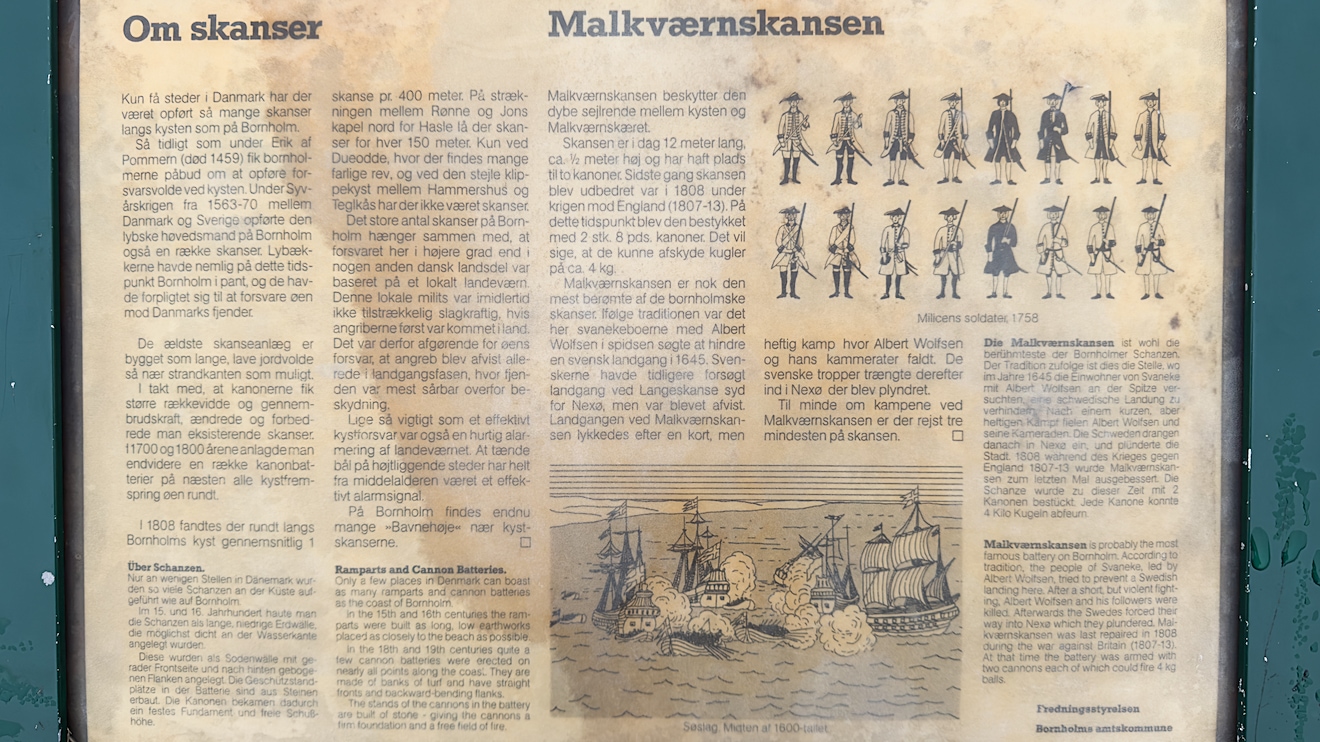
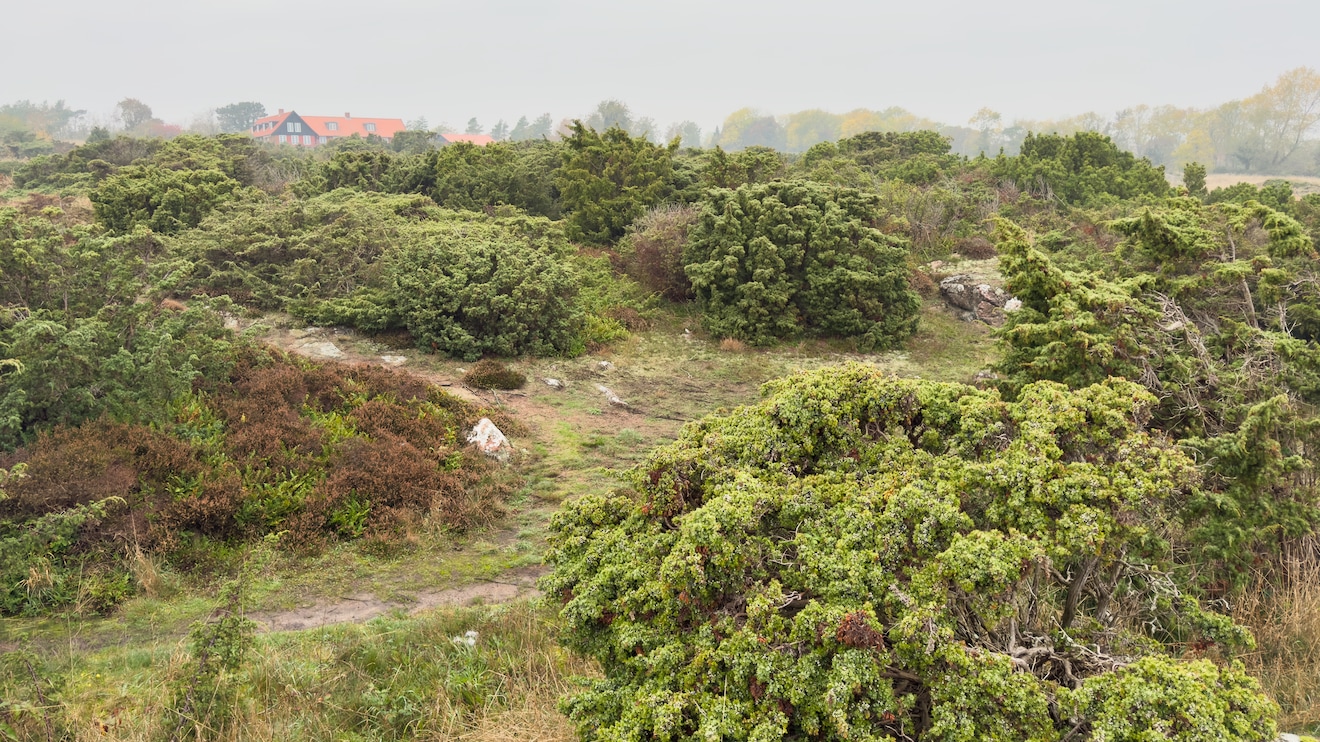
Malkværn Skanse is a historic coastal fortification on Bornholm’s east coast, known for its role in several important events. The name "Malkværn" originates from a nearby reef, where the sound of the waves resembles a mill grinding malt.
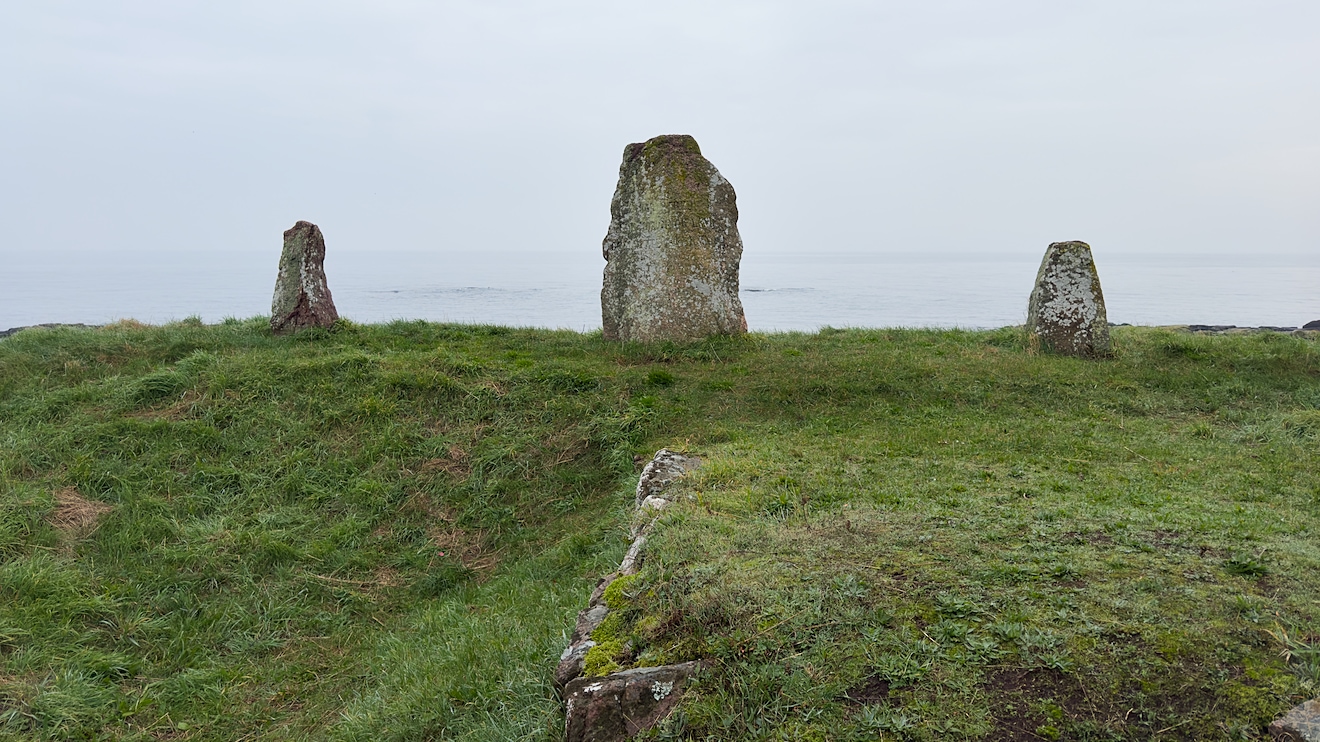
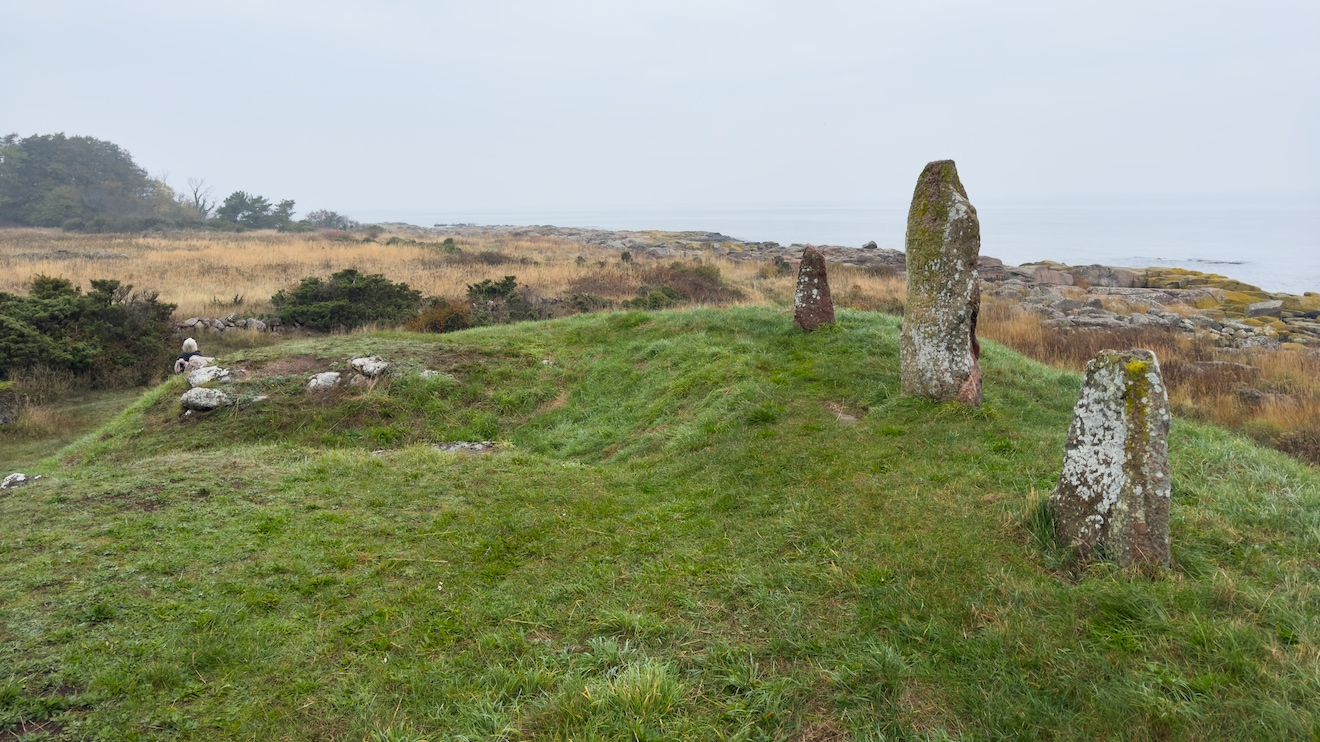
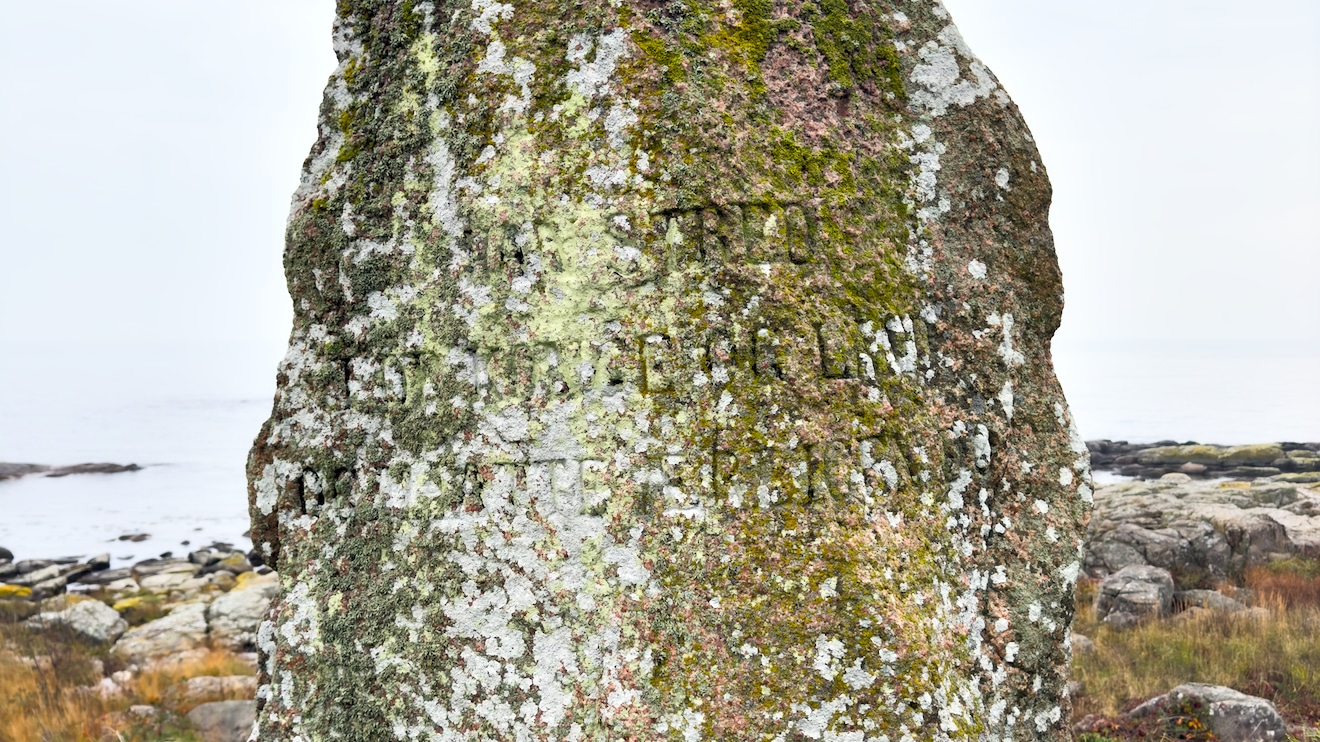
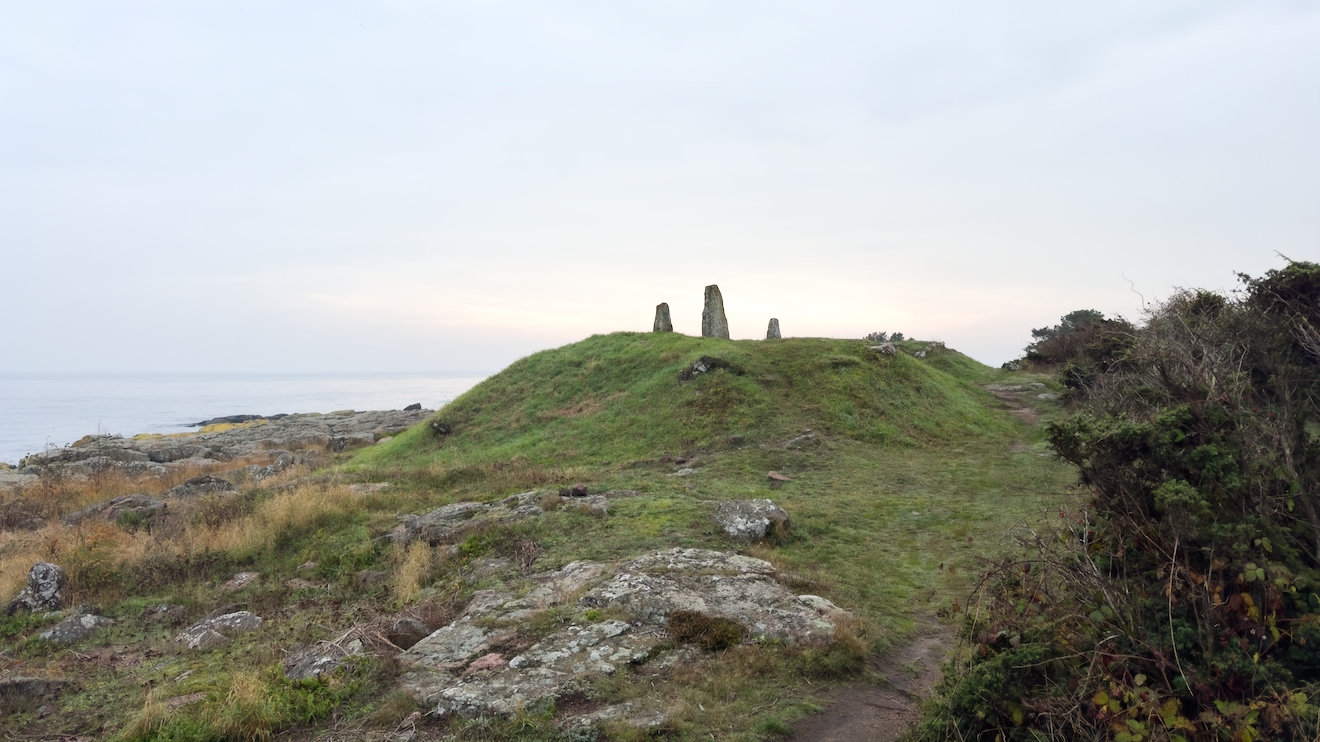
On June 9, 1645, Bornholm soldiers led by Albret Wolfsen attempted to prevent a Swedish landing at the skanse. Around 500 Swedish soldiers came ashore, and in the brief but intense battle, Wolfsen and his men fell. After the defeat, the Swedes plundered Nexø. In memory of the fallen, three standing stones were erected in 1901, at the same time as the earthwork was protected. The largest stone carries the inscription “ALBRET WOLFSEN // 9 JUNE 1645” facing the sea, and “HAN STRED // FOR KONGE OG LAND // OG MÅTTE ÆRLIGEN DØ” (English translation: He fought for king and country and met an honourable death) facing inland, while the two side stones have no inscriptions.
The skanse, which already existed in the 17th century, was expanded during the English Wars (1807–14) to accommodate two cannons as part of a general upgrade of Bornholm’s coastal defenses. It is 12 meters long and about ½ meter high and was part of a network of skanses built approximately 400 meters apart along the coast. Today, Malkværn Skanse stands as a historic monument and testament to the island’s defensive history.
Malkværn Skanse is a historic coastal fortification on Bornholm’s east coast, known for its role in several important events. The name "Malkværn" originates from a nearby reef, where the sound of the waves resembles a mill grinding malt.
On June 9, 1645, Bornholm soldiers led by Albret Wolfsen attempted to prevent a Swedish landing at the skanse. Around 500 Swedish soldiers came ashore, and in the brief but intense battle, Wolfsen and his men fell. After the defeat, the Swedes plundered Nexø. In memory of the fallen, three standing stones were erected in 1901, at the same time as the earthwork was protected. The largest stone carries the inscription “ALBRET WOLFSEN // 9 JUNE 1645” facing the sea, and “HAN STRED // FOR KONGE OG LAND // OG MÅTTE ÆRLIGEN DØ” (English translation: He fought for king and country and met an honourable death) facing inland, while the two side stones have no inscriptions.
The skanse, which already existed in the 17th century, was expanded during the English Wars (1807–14) to accommodate two cannons as part of a general upgrade of Bornholm’s coastal defenses. It is 12 meters long and about ½ meter high and was part of a network of skanses built approximately 400 meters apart along the coast. Today, Malkværn Skanse stands as a historic monument and testament to the island’s defensive history.
Malkværn Skanse is a historic coastal fortification on Bornholm’s east coast, known for its role in several important events. The name "Malkværn" originates from a nearby reef, where the sound of the waves resembles a mill grinding malt.
On June 9, 1645, Bornholm soldiers led by Albret Wolfsen attempted to prevent a Swedish landing at the skanse. Around 500 Swedish soldiers came ashore, and in the brief but intense battle, Wolfsen and his men fell. After the defeat, the Swedes plundered Nexø. In memory of the fallen, three standing stones were erected in 1901, at the same time as the earthwork was protected. The largest stone carries the inscription “ALBRET WOLFSEN // 9 JUNE 1645” facing the sea, and “HAN STRED // FOR KONGE OG LAND // OG MÅTTE ÆRLIGEN DØ” (English translation: He fought for king and country and met an honourable death) facing inland, while the two side stones have no inscriptions.
The skanse, which already existed in the 17th century, was expanded during the English Wars (1807–14) to accommodate two cannons as part of a general upgrade of Bornholm’s coastal defenses. It is 12 meters long and about ½ meter high and was part of a network of skanses built approximately 400 meters apart along the coast. Today, Malkværn Skanse stands as a historic monument and testament to the island’s defensive history.