Bornholms Museum

Bornholms Museum
– Bornholm’s history gathered in one museum
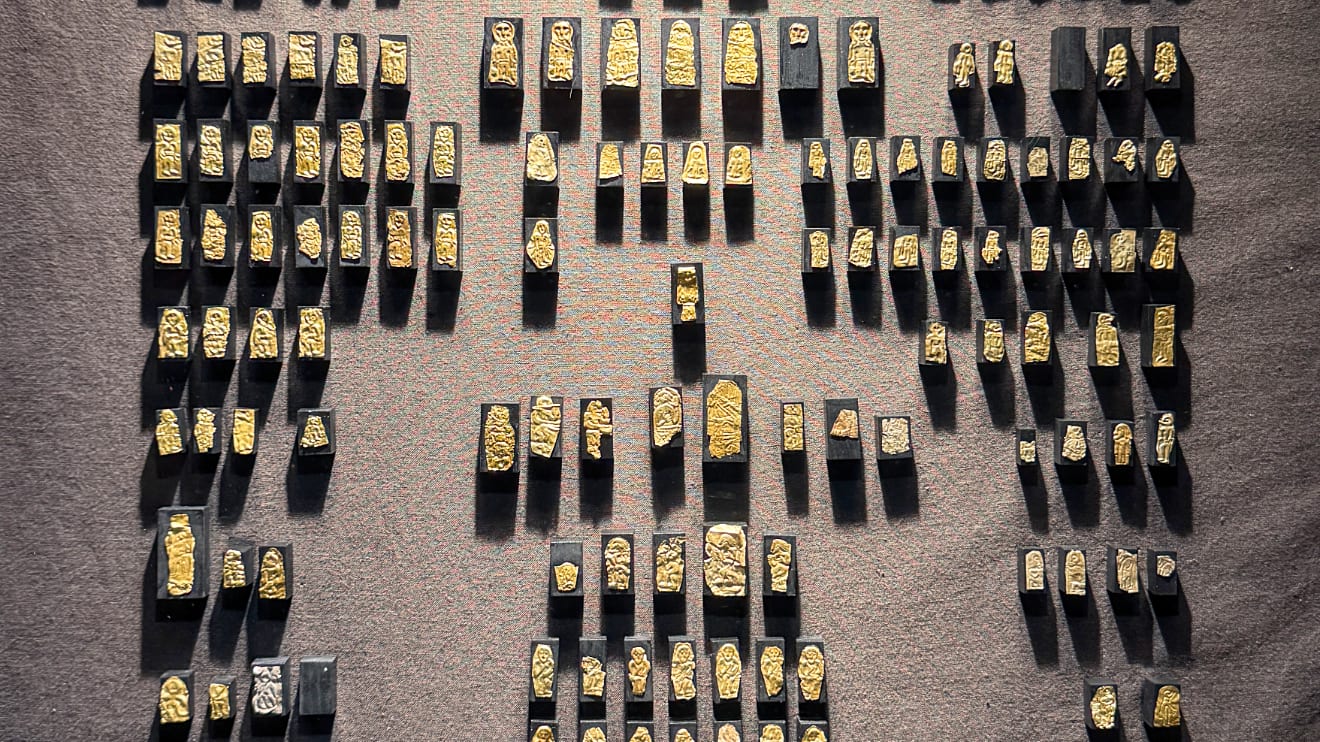
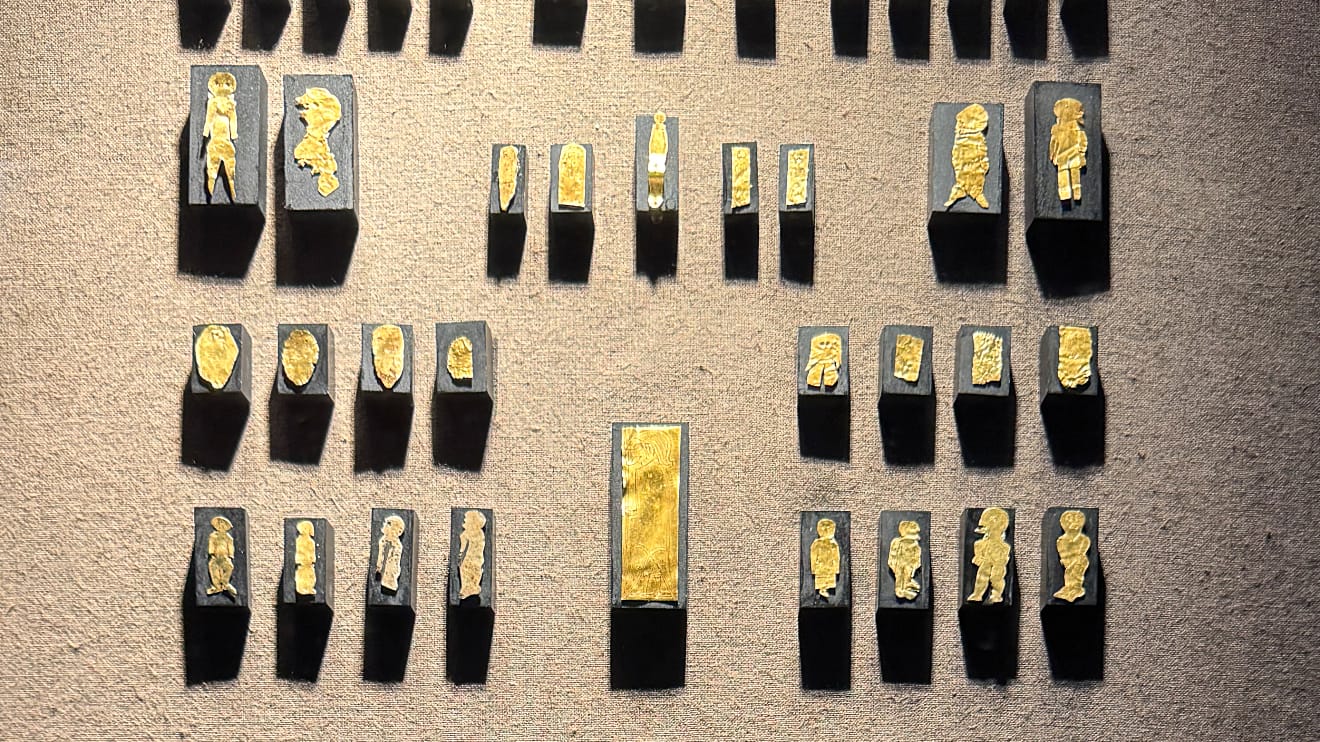
Bornholms Museum in Rønne is the island’s cultural history museum. Here you can explore Bornholm’s history through archaeological finds and exhibitions about, among other things, the gold foil figures from Sorte Muld, Bornholm clocks, seafaring, everyday life, the Second World War and the Cold War.
The museum is currently located on Sankt Mortens Gade in central Rønne, but a major change is underway. A brand-new Bornholms Museum is being developed at the harbour in Nexø and is due to open no later than Easter 2028.
The gold foil figures from Sorte Muld
Among the museum’s most remarkable finds are the famous gold foil figures from Sorte Muld near Ibsker. Bornholms Museum describes them as Bornholm’s greatest archaeological find.
The gold foil figures are small, paper-thin figures made from sheets of gold, depicting people and animals. More than 3,000 gold foil figures have been found at Sorte Muld, making the area one of the most important archaeological sites in Europe. They have been dated to around AD 550–600 – the period known as the Germanic Iron Age.
The exact function of the gold foil figures has not been definitively established, but archaeologists believe they were probably used, among other things, as offerings, religious objects or a form of “temple money”.
Bornholm clocks and life at sea
A particularly distinctive part of Bornholm’s history is the story of the Bornholm clocks. It began with a shipwreck in 1744, when a Dutch vessel carrying a cargo of English longcase clocks ran aground between Rønne and Hasle. Local craftsmen were asked to clean and repair the clocks, and this marked the beginning of clockmaking on Bornholm.
From around 1750 to 1900, almost 240 clockmakers were active on Bornholm. Today, Bornholms Museum has the world’s largest collection of Bornholm clocks, and a large selection can be seen at the museum.
Seafaring has also played an important role in Bornholm’s history. The museum’s maritime exhibition includes a large collection of ship portraits as well as ship models, navigation instruments and figureheads. The exhibition tells the story of shipping, fishing and Bornholm’s connections with the world beyond the island.
A different end to the Second World War
The Second World War ended differently on Bornholm than in the rest of Denmark. After the announcement of Denmark’s liberation on 4 May 1945, Rønne and Nexø were bombed by Soviet aircraft on 7 and 8 May. A period of Soviet military presence on the island then followed, until the troops left Bornholm on 6 April 1946.
The museum’s exhibition tells the story of the occupation and the dramatic end of the war, as well as the resistance movement, German refugees from the east and everyday life during the war.
The story continues into the Cold War. Bornholm’s location, positioned close to the Eastern Bloc, gave the island a special strategic importance during the Cold War, including the ability to monitor activities to the east from radar installations on Bornholm.
In the museum garden, you can also visit the bunker that was used during the bombing of Rønne.
Bornholmers and the wider world
Bornholm’s history reaches far beyond the island’s shores. The museum’s ethnographic collection consists of objects from many parts of the world that Bornholmers brought or sent home over the years from their lives and travels abroad.
The collection includes objects from the Belgian Congo, Malaysia, China, Korea, Australia and Indonesia. The exhibition tells the story of adventurous Bornholmers and their encounters with the wider world, while also addressing European colonialism and its consequences for local populations.
On the museum’s top floor, you can get closer to everyday life at home. The exhibition presents daily life for children and adults during the interwar years, around 1920–1940, with features including an old classroom, toys and a traditional general store. There is also a play corner for children.
Rock carvings – traces from the Bronze Age
Bornholm is the part of Denmark with the greatest number of rock carvings. Signs and images from the Bronze Age can be found on the island’s rock surfaces – including the distinctive ship motifs.
The ships depicted in the rock carvings should not be confused with Viking ships. The Bornholm ship motifs mainly date from the Late Bronze Age, around 1100–500 BC, and are therefore much older.
Bornholms Museum works with the island’s rock carvings and has, among other things, produced a guide to 16 publicly accessible rock carving sites around Bornholm.
A new Bornholms Museum is on the way in Nexø
Bornholms Museum is facing a major transformation. The cultural history museum will move from its current premises in Rønne to Nexø Harbour, where a former fish filleting factory is being converted into the new museum.
The new premises will give the museum significantly more space to tell Bornholm’s story and display the island’s archaeological finds. Among other things, it will become possible to exhibit finds that can currently only be seen at the National Museum of Denmark in Copenhagen. Entirely new exhibitions are being developed in collaboration with the design team at Moesgaard Museum.
The new museum will also include “MUSEUM+” – a free area that will be open all year round. Here, visitors will be able to get a taste of the museum’s exhibitions, take part in activities and events, or simply drop in and take a break.
Bornholms Museum took over the building in spring 2026, after which work began to prepare it as a museum and develop the new exhibitions. The new Bornholms Museum is due to open no later than Easter 2028.
Bornholms Museum’s other branches
Bornholms Museum was founded in 1893 and today has four branches. In addition to the cultural history museum in Rønne, you can visit Hjorths Fabrik and Erichsens Gård in Rønne, as well as Melstedgård near Gudhjem.
The three branches are listed as separate places to visit on FeelBornholm, where you can read more about their history and what you can experience there.